




The Soul of Korean Flavor
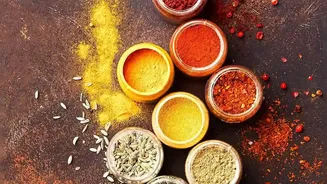
Gochujang is much more than just a hot sauce. It is a foundational pillar of Korean cuisine, sharing a place of honor with doenjang (soybean paste) and ganjang (soy sauce). This thick, crimson paste is crafted from a potent blend of red chili powder (gochugaru),
glutinous rice, fermented soybean powder (meju), and salt. The mixture is traditionally fermented, sometimes for years, in earthenware pots called jangdok. This ancient process is where the magic happens. Enzymes break down the starches in the rice, creating a subtle, natural sweetness that beautifully balances the robust, savory depth from the fermented soybeans and the lingering, satisfying heat of the chilies. The result is a complex flavour profile that is simultaneously spicy, sweet, and packed with umami, making it incredibly versatile.
Transforming the Simple
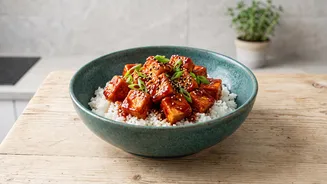
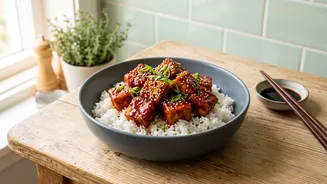
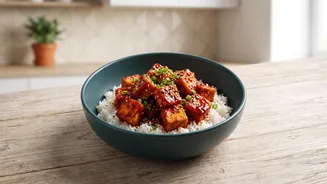
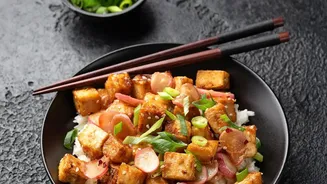
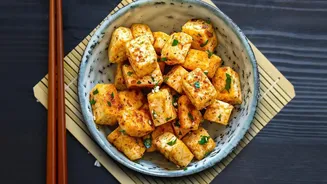
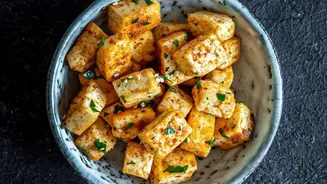
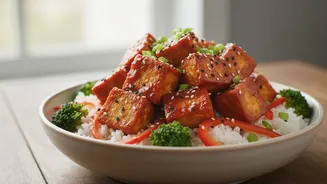
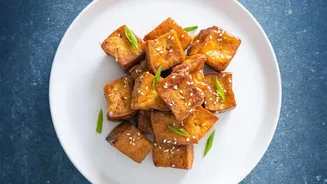
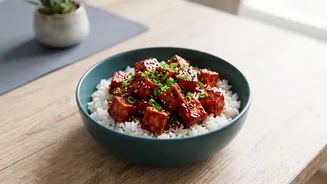
Consider a humble bowl of crispy tofu and steamed rice. It’s a perfectly fine, if unexciting, meal. Now, add a sauce made from gochujang. The paste is rarely used alone; its concentrated power is best unlocked when combined with other ingredients. Whisked with soy sauce, a touch of maple syrup or honey for sweetness, rice vinegar for brightness, and fragrant sesame oil, gochujang becomes a glossy, irresistible glaze. When tossed with the crispy tofu, it clings to every surface, infusing the dish with its fermented heat and savoury depth. That once-plain meal is now a dynamic interplay of textures and tastes. The subtle sweetness cuts through the spice, the umami makes the tofu taste richer, and the heat warms you from the inside out. This is the “useful story” of gochujang: its incredible ability to elevate everyday ingredients into something truly memorable.
The 'Authenticity' Hype
In the world of food, particularly online, the word “authentic” is a loaded term. It can be a gateway to learning and respect, but it can also become a rigid gate, policed by commenters quick to point out any deviation from tradition. People often seek authentic recipes because they want to connect with the culture that created a dish, to experience it as it was intended. But what is truly authentic? In Korea itself, recipes for staples like kimchi or stews can vary from family to family and region to region. The idea of a single, unchangeable “authentic” recipe is often a myth. This purist approach can stifle creativity and create a sense of anxiety for home cooks who simply want to try new flavours. It prioritizes rules over the joy of cooking and eating.
Inspired vs. Imitation
This is where the distinction between “inspired” and “authentic” becomes so useful. Claiming a dish is authentically Korean when it significantly deviates from traditional methods or ingredients can be misleading. However, labelling a dish “Korean-inspired” is an honest and respectful approach. It acknowledges the source of the core flavours while allowing for adaptation based on available ingredients or personal taste. A gochujang tofu bowl might not be something you’d find in a traditional restaurant in rural Korea, but it uses a quintessentially Korean ingredient in a way that honours its flavour profile. It celebrates the spirit of Korean cooking—its bold, complex flavours—without being locked into a strict imitation. This approach is about appreciation, not appropriation, and it opens the door for wonderful culinary creativity.