





The Post-Monsoon Shift
Throughout the monsoon months, from roughly July to September, heavy rains wash pollutants out of the atmosphere, while strong winds help disperse whatever remains. This provides a temporary respite, leading to some of the cleanest air days of the year.
However, as the monsoon withdraws, this natural cleansing mechanism disappears. The winds die down and the air becomes stagnant, setting the stage for pollutants to accumulate rapidly. In early October 2026, Delhi's air quality had already started to dip into the 'moderate' and 'poor' categories, signaling the end of the clearer monsoon period.
The Onset of Stubble Burning
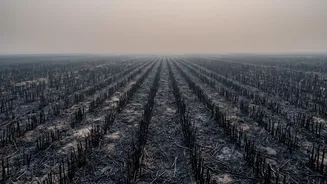
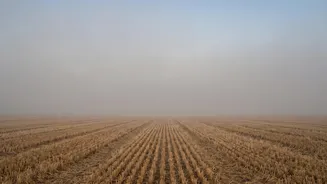
October coincides with the end of the paddy harvesting season in the neighboring states of Punjab and Haryana. Farmers are left with a very short window to clear their fields of leftover stubble to prepare for the winter wheat crop. Burning the stubble is often the fastest and cheapest method. Smoke from these thousands of farm fires is carried by north-westerly winds directly towards the landlocked Delhi-NCR region. While farm fires have started in early October 2026, their intensity is expected to peak later in the month and into November, contributing significantly to the region's PM2.5 load. To combat this, flying squads have been deployed in 34 districts of Punjab and Haryana to monitor and control stubble burning incidents through the season.
A Change in the Weather
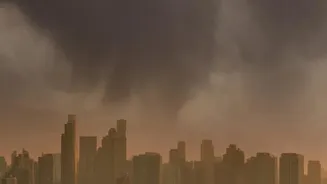
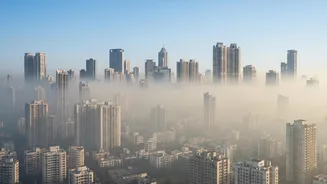
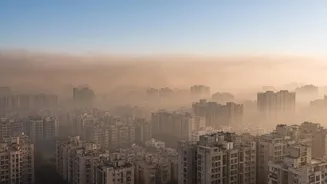
Meteorology plays a crucial role in trapping pollution. As temperatures begin to drop in October, a phenomenon known as 'temperature inversion' occurs. Typically, warmer air sits near the ground and rises, carrying pollutants with it. In winter, however, the ground cools faster at night, leaving a layer of cool, dense air near the surface with a layer of warmer air above it. This warm air acts like a lid, trapping the cooler air and all the pollutants within it close to the ground where people breathe. Lower wind speeds during this period mean there is no force to blow the polluted air away, causing smog to form and linger for days.
The Baseline Never Left
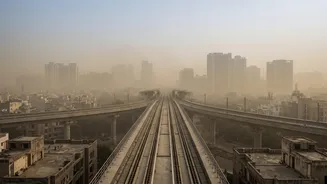
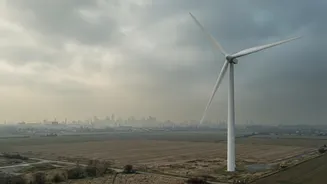
While seasonal factors like crop burning get a lot of attention, Delhi-NCR has a high baseline of pollution year-round. This 'background' pollution comes from a combination of constant sources: vehicular emissions, industrial activity, dust from construction sites, and the burning of waste. During other times of the year, meteorological conditions are more favourable for dispersal. But in October, these everyday emissions get trapped along with the smoke from farm fires, creating a toxic cocktail that sends the Air Quality Index (AQI) soaring. Even without stubble smoke, the drop in wind speed and temperature is enough to worsen air quality significantly.
The Festive Factor and GRAP
The festive season, particularly Diwali, often falls in October or November and contributes an episodic, but intense, burst of pollution from firecrackers. In anticipation of the deteriorating air quality, authorities implement the Graded Response Action Plan (GRAP) from October 1. These measures are activated in stages depending on the severity of the AQI. Stage I, already in effect, includes stricter enforcement of Pollution Under Control (PUC) norms for vehicles and rules for dust mitigation at construction sites. As the AQI worsens, later stages can bring restrictions on certain types of vehicles, diesel generators, and construction activities.