


The Growing Junkyard Above Our Heads
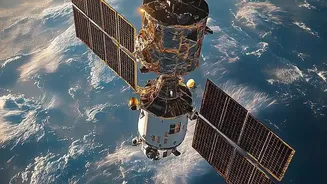
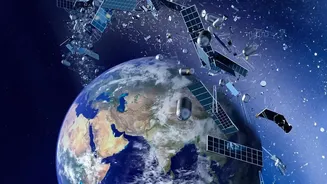
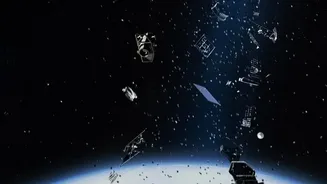
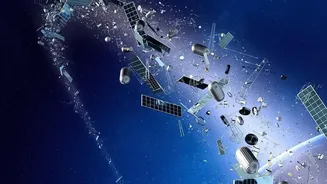
For decades, humanity has been launching rockets and satellites into orbit. But what goes up doesn't always come down. Earth is now surrounded by a cloud of space debris: defunct satellites, spent rocket stages, and millions of smaller fragments from
collisions and explosions. There are over 31,000 tracked objects, but countless more are too small to monitor. This isn't just a tidiness problem; it's a significant economic and operational threat. Travelling at incredible speeds, a fragment as small as 1 cm can disable a multi-million dollar satellite on impact. This orbital congestion jeopardises everything from weather forecasting and GPS navigation to future space exploration and the safety of manned missions.
The Three Pillars of Debris Removal
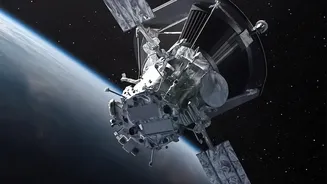
Addressing the debris problem hinges on three core technological areas. First is tracking and monitoring, often called Space Situational Awareness (SSA). Companies like LeoLabs and Privateer specialise in using advanced radar and optical systems to map the debris, predict collision courses, and warn satellite operators. The second pillar is capture. This is the active part of removal, with companies developing methods like robotic arms, nets, and harpoons to grab tumbling, non-cooperative objects. The third is de-orbiting. Once captured, the junk must be safely removed. This can involve using a propulsion system to push it into a decaying orbit where it burns up in the atmosphere or attaching a drag sail to accelerate its natural orbital decay.
Sizing a Billion-Dollar Opportunity
The potential for a debris removal market is substantial, driven by the sheer necessity of protecting valuable space assets. Market forecasts vary, but most point to significant growth. Some analyses project the combined market for debris tracking and removal to be around $1.2 billion in 2025, potentially growing to over $2.7 billion by the early 2030s. Other projections show even more aggressive growth, with the removal-specific market potentially reaching $600 million by 2028. The primary customers are commercial satellite operators, insurance companies, and government agencies like NASA and the European Space Agency (ESA), which are already funding demonstration missions.
Why It's a Forecast, Not a Certainty
Despite the clear need, the path to a robust commercial market is fraught with challenges. The economics are daunting; a single removal mission can cost between $10 million and $100 million today, often to remove just one object. ESA's ClearSpace-1 mission, for example, is contracted for around €86 million to remove one piece of debris. Beyond cost, there are immense legal and regulatory hurdles. A core issue is ownership; under international law, a defunct satellite still belongs to the nation that launched it, meaning a third party cannot simply salvage or remove it without permission. This creates a situation where the problem belongs to everyone, but the responsibility and business case belong to no one, hindering the development of a 'clean-up' service economy.
The Pioneers on a High-Risk Frontier
Several key players are paving the way. Japan's Astroscale has already demonstrated rendezvous and inspection technology with its ADRAS-J mission. Swiss-based ClearSpace holds ESA's first contract for an active removal mission. Larger aerospace firms like Northrop Grumman are also involved, alongside a new generation of startups such as OrbitGuardians and Paladin Space, which are aiming to make removal an operational service rather than a series of experiments. These companies aren't just developing technology; they are actively working with governments and insurance companies to define the business case and regulations that could turn this forecast into a functional market.