






Decoding 'Talking Cars' Technology
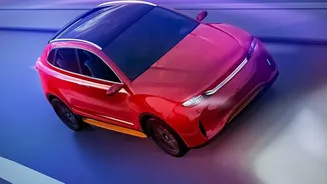
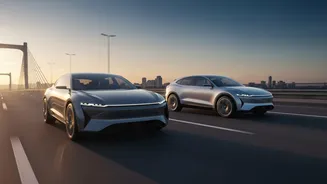
Vehicle-to-Vehicle (V2V) communication is a technology that allows cars to wirelessly exchange information with each other in real-time. Think of it as a social network for vehicles, where they constantly share updates on their speed, position, direction,
and braking status. This isn't just a futuristic concept; it's a concrete proposal from India's Ministry of Road Transport and Highways (MoRTH). A recent draft notification outlines a plan to make these systems mandatory for all new cars, two-wheelers, and commercial vehicles. The core idea is to create a digital ecosystem on the roads where every vehicle is aware of the others around it, enabling a new level of predictive safety.
The Focus on Critical Safety Signals
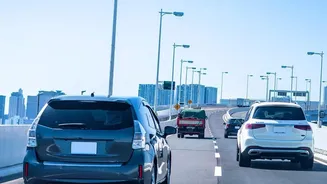
The main goal of this initiative is to drastically reduce road accidents by focusing on the exchange of critical safety signals. Unlike current in-car systems like cameras or radar, which are limited by line of sight, V2V can warn a driver about dangers they cannot see. For example, if a car several vehicles ahead suddenly slams on its brakes, your car would receive an instantaneous 'Emergency Brake Alert'. The system can also provide warnings for forward collision risks, unsafe lane changes, and even alert you to an approaching emergency vehicle. One of the most significant applications for Indian roads is its ability to issue a 'Wrong-Way Driving' alert, a common cause of serious accidents on highways.
A High-Tech Answer to a National Crisis
The push for V2V technology is directly linked to India's urgent need to improve its road safety record. The technology is expected to complement existing Advanced Driver Assistance Systems (ADAS) and support proactive accident prevention. By enabling cars to communicate beyond the driver's direct line of sight, the system can provide crucial warnings in complex traffic situations common in India. The government's proposal lays out a phased implementation plan. The first phase, starting October 1, 2027, would require any vehicle fitted with a V2V system to comply with a new standard, AIS-230. The second phase makes the technology mandatory for all new vehicles manufactured from October 1, 2028.
The Technology Making It Possible
The technological backbone for this initiative is specified as Cellular Vehicle-to-Everything (C-V2X). This standard leverages existing cellular networks, particularly 5G, to facilitate communication. It allows vehicles to talk directly to each other (V2V), as well as to roadside infrastructure like traffic lights (V2I) and even pedestrians (V2P). A crucial step was taken in June 2026, when the Department of Telecommunications de-licensed the 5.9 GHz frequency band, earmarking it specifically for these intelligent transport applications and clearing a major regulatory hurdle for deployment.
Hurdles on the Road to Adoption
While the vision is promising, the road to full adoption has its challenges. One of the primary concerns is the cost of fitting every new vehicle—from two-wheelers to trucks—with the required On-Board Units. For the system to be effective, it needs widespread adoption; a few 'talking cars' in a sea of silent ones will have limited impact. Furthermore, ensuring the reliability of the communication network across India's diverse geography is a significant infrastructural challenge. Finally, establishing a robust and unified protocol is essential. All manufacturers must use a common 'language' to ensure that a vehicle from one brand can seamlessly communicate with another, a task that requires close coordination between government bodies and the automotive industry.