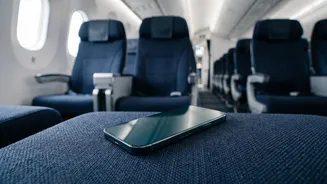








It’s a sinking feeling every traveller dreads: you’ve deplaned, cleared the airport, and suddenly realise your tablet, headphones, or jacket is still on the plane. The frantic race to get it back often ends in frustration. Why is it so difficult?
The Race Against the Clock
The primary
reason retrieving a lost item is so hard is the aircraft 'turnaround'. This is the tightly choreographed period between a plane's arrival and its next departure. For many short-haul flights operated by low-cost carriers, this window can be as short as 25 to 30 minutes. Legacy carriers might schedule 45 to 60 minutes for the same type of plane, while long-haul international flights can have turnarounds of 90 minutes to three hours. In this brief interval, a flurry of activity occurs simultaneously: passengers disembark, the plane is refuelled, baggage and cargo are unloaded and loaded, catering is restocked, and the cabin is cleaned. Every minute an aircraft sits at the gate is a minute it isn't generating revenue, making speed the absolute priority. Your forgotten item is a very small needle in a very fast-moving haystack.
Who Finds Your Lost Item?
When you leave something behind, it’s unlikely to be found by the flight attendants who served you. By the time all passengers are off the plane, so is most of the cabin crew, preparing for their next duty or heading home. The task of cleaning the cabin falls to a ground crew. Often, these cleaning crews are not direct airline employees but contractors hired for speed and efficiency. Their main job is to quickly clear rubbish, wipe down surfaces, and prepare the cabin for the next set of passengers within that tight turnaround window. While many are diligent, their primary performance metric is speed. An item left in a seat-back pocket might be found, but it becomes one more object to be handled in a process where every second counts. It’s then handed off, introducing the first of many potential points of failure in the recovery chain.
The Fragmented Journey of a Found Item
Once an item is found on a plane, it begins a journey through a surprisingly fragmented system. It doesn't go to a single, central lost and found. First, it's typically handed over by the cleaning crew to the airline's local ground staff at that specific airport. It's crucial to distinguish between items lost on the plane versus in the terminal. If you lose something at security, a gate lounge, or a restaurant, you need to contact the airport's lost and found. If it was left on the aircraft, the airline is your point of contact. These are often two entirely separate operations. The item is catalogued and stored, but this process takes time. It might not appear in the airline's system for hours or even days. If it remains unclaimed after a set period, usually 30 to 90 days, it could be transferred to a central warehouse, donated, or destroyed.
How to Maximize Your Chances of Recovery
Despite the challenges, recovery is possible if you act quickly and methodically. As soon as you realize your item is missing, contact the airline. If you are still at the airport, go directly to the airline’s customer service desk or the gate agents from your arriving flight. They may be able to radio the cleaning crew or gate agent for the departing flight. If you’ve already left the airport, file a lost item report online immediately through the airline's official website. Be incredibly specific in your description. Don't just say 'black headphones'; provide the brand, model, and any unique marks or scratches. If it's a laptop or phone, include the serial number. The more detailed your report, the higher the chance of a successful match. Follow up on your report, but be patient, as the internal logging process can take time.