








Meet the U1: An AI Companion
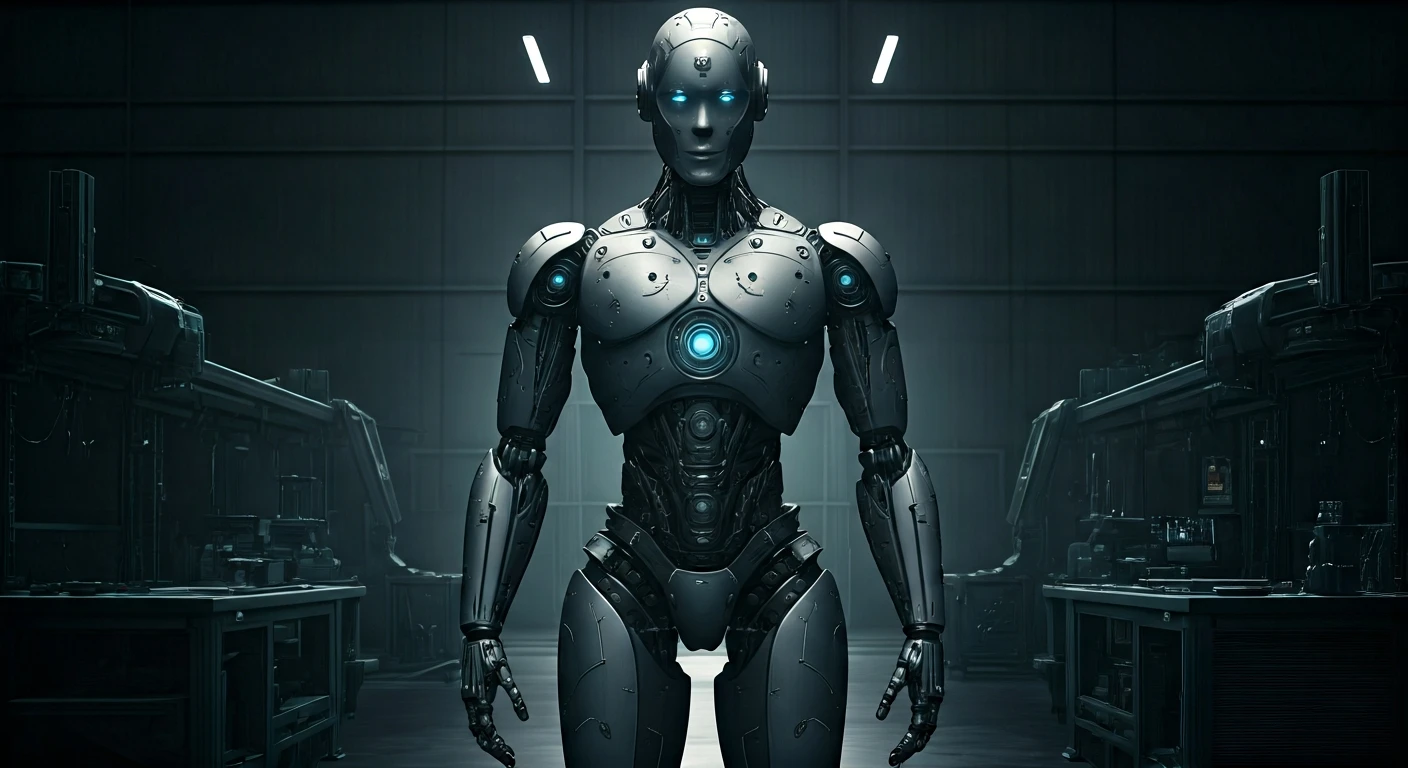
Chinese robotics company UBTech has officially launched the UWORLD U1, a humanoid robot designed not for a factory floor, but for human companionship. Unveiled in Shenzhen, the U1 represents a significant push to move robotics from industrial automation
into consumer-focused roles like elder care, hospitality, and domestic assistance. Available in male and female versions that stand 183cm and 168cm respectively, the U1 is designed to interact naturally with people. It features a silicone exterior for a more lifelike appearance and is built around the idea of providing emotional support and daily interaction. With cumulative orders already exceeding 13,000 units shortly after launch, it signals strong early interest in the concept of a personal AI you can talk to face-to-face.
The 'Emotional AI' Brain
The core of the U1 isn't just its realistic body, but its sophisticated 'emotional AI'. According to UBTech, the system is designed to understand human emotions by analyzing facial expressions, voice tone, and conversation rhythm, with a claimed accuracy of over 90% across more than 20 emotional states. Unlike a typical smart speaker, the U1 aims to build a relationship, remembering past conversations and personal details to create more natural, ongoing interactions. Crucially, UBTech emphasizes privacy, stating that this sensitive data is processed and encrypted locally on the robot's hardware, not sent to the cloud, to ensure user interactions remain private.
Under the Silicone Skin
The U1’s human-like movements are made possible by 88 independent servo joints, giving it a wide and fluid range of motion that mimics human gestures rather than rigid robotic actions. This allows it to perform actions like sitting, leaning, and even dancing with a human partner. The robot is equipped with cameras in its eyes for visual tracking and maintaining eye contact, a key component of its social design. It runs on a battery that provides between two and four hours of operation depending on usage. The U1 is offered in three main variants—Lite, Pro, and Ultra—with prices ranging from approximately ₹14 lakh to over ₹1 crore, targeting everyone from tech enthusiasts to high-end corporate clients.
A New Player in the Humanoid Race
UBTech isn't alone in the race to build capable humanoid robots, but its focus on companionship sets it apart. While companies like Boston Dynamics, Tesla, and Agility Robotics are primarily focused on industrial labor, logistics, and athletic capabilities, the U1 is squarely aimed at the social and service market. Its main purpose is not to perform chores but to provide company, remind users to take medication, or act as a friendly presence. This positions the U1 in a unique niche, betting that the first mass-market humanoid robot will be a companion rather than a worker. However, it will face competition from other firms like Unitree, which also offers a range of humanoid robots for research and development, some at more accessible price points.
The Future of Embodied Intelligence
The launch of the U1 raises profound questions about the future of human-robot interaction. Proponents see it as a powerful tool to combat loneliness, especially among the elderly, and to provide a new level of assistance in daily life. However, it also sparks debate about the potential for emotional attachment to an AI and whether such relationships could reduce real-world social connections. While the U1 cannot perform household chores, its ability to hold a conversation and respond to emotions represents a major step toward physical AI—where artificial intelligence can interact with the world autonomously. As UBTech's founder, James Zhou, noted, robots are transitioning from hazardous work to companionship, on a path to eventually becoming intelligent partners in our everyday lives.