





The Earth's Great Restlessness
The ground beneath our feet is never truly still. The planet’s outer layer is a puzzle of massive tectonic plates that drift atop the molten mantle at roughly the same speed your fingernails grow. This ceaseless movement is part of the supercontinent
cycle, a geologic rhythm of assembly and dispersal that has defined our planet for billions of years. The last time most of Earth's land was fused together was about 300 million years ago, forming the famous supercontinent, Pangea. Its breakup, which began around 180 million years ago, gave us the continents we know today and created the Atlantic Ocean. We are currently in the middle of a cycle, with the continents scattered, but the clock is ticking towards the next great assembly.
Meet the Supercontinent Contenders
While the headline might focus on Pangea Ultima, the truth is that scientists have several competing models for what the next supercontinent will look like, as projecting plate tectonics is an incredibly complex task. The name Pangea Ultima (also called Pangea Proxima) was coined by Christopher Scotese for a scenario where the Atlantic Ocean stops expanding and begins to close. This would eventually pull the Americas back towards a merged Afro-Eurasian landmass, creating a world somewhat reminiscent of the original Pangea. However, there are other compelling possibilities. The 'Novopangea' model suggests the Atlantic will keep opening, causing the Pacific to close and the Americas to smash into Asia. The 'Amasia' hypothesis predicts that most continents will drift north and collect around the pole, while the 'Aurica' model sees both the Atlantic and Pacific oceans closing, forcing the continents to meet over a new ocean basin formed from a rift in Asia.
A World of Extremes
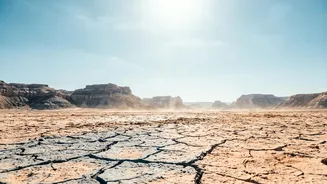
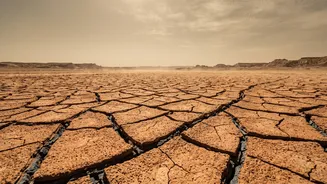
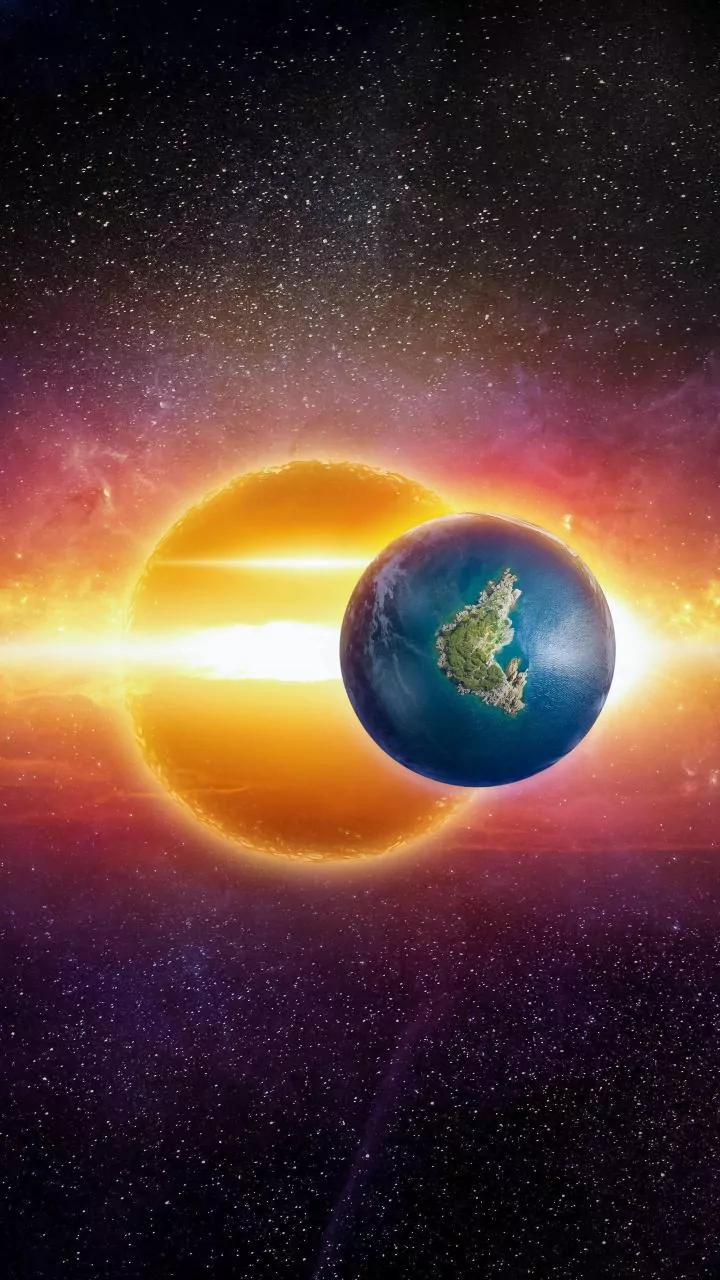
The shape of the next supercontinent is more than a geographic curiosity; it will fundamentally rewire Earth's climate. Recent research, particularly focusing on the Pangea Ultima model, paints a stark picture of a world largely hostile to mammal life. A 2023 study published in Nature Geoscience used supercomputer simulations to model this future world. The results suggest a planet of brutal extremes. With most of the landmass locked in the tropics and far from the moderating influence of oceans, vast inland deserts would form. Temperatures across these interiors could average between 40 and 50 degrees Celsius. Compounding this, the sun is slowly getting brighter, and is expected to emit about 2.5% more radiation in 250 million years. When combined with higher atmospheric carbon dioxide levels from long-term volcanic activity, the models indicate that as little as 8% of the supercontinent's land could remain habitable for mammals.
Why This Deep Future Matters Now
A world 250 million years away is almost impossible to comprehend, and these models are not firm predictions but rather simulations of possible outcomes. Humans will almost certainly not be around in our current form to witness this new world. So why study it? Because understanding the supercontinent cycle provides profound insights into how Earth works as a system. It connects the engine of plate tectonics to long-term climate change, sea-level fluctuations, and the very evolution of life on the planet. By modelling these extreme future scenarios, scientists can test and refine their understanding of the fundamental forces that shaped Earth's past and continue to operate today. It’s a powerful reminder that our world is not a static stage, but an active and ever-evolving planet on a journey measured in eons.