



The Earth-Bound Problem
For decades, navigating in deep space has been a conversation between a spacecraft and Earth. To know where a rover or lander is on the Moon, engineers rely on the Deep Space Network (DSN), a global array of giant radio antennas. This system involves
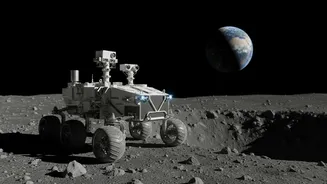
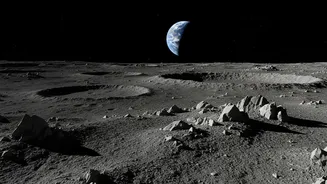
sending signals from Earth to the spacecraft and timing the reply to calculate its position. While incredibly precise, this method has limitations. It's time-consuming, the DSN is in high demand for countless missions, and it's impossible for rovers on the far side of the Moon, which is permanently blocked from Earth's view. As humanity prepares for a more permanent and dynamic presence on the lunar surface under the Artemis program, this reliance on Earth becomes a significant bottleneck.
A Lunar GPS in the Making
NASA's solution is a suite of technologies designed to create a local, lunar-based navigation network. One key piece of this puzzle is the Lunar Navigation Payload, a class of instruments designed to operate independently from Earth. A recent example is the NavCube3-mini, a compact 3.5-pound receiver delivered to the commercial space company Intuitive Machines in July 2026. This device is designed to be installed on a lunar communications relay satellite, the first of a planned constellation. The idea is to create an infrastructure around the Moon that provides Positioning, Navigation, and Timing (PNT) services, much like the GPS satellite constellation does for Earth.
How It Navigates the Void
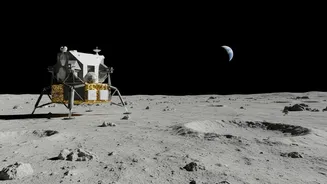
The clever part of this new technology is how it works without a direct line to mission control. Instead of relying solely on Earth, these advanced receivers are sensitive enough to pick up the faint, spillover signals from Earth's own Global Navigation Satellite Systems (GNSS), which includes the US GPS and European Galileo constellations. The NavCube3-mini, for instance, is engineered to acquire these weak signals far beyond their intended operational range. By processing these signals on board, the spacecraft can calculate its own position and time autonomously. This is supplemented by other technologies, like laser retroreflectors on landers that act as precise markers and radio beacons like Lunar Node-1, creating a network of 'lighthouses' on the lunar surface.
The Future of Lunar Exploration
Giving rovers and astronauts the ability to navigate autonomously is more than a convenience; it’s a fundamental requirement for the next phase of lunar exploration. It enables faster and more efficient operations. For example, a rover could travel greater distances and make more complex decisions without waiting for instructions from a controller on Earth, a process that can take seconds for every command. This capability is critical for exploring regions of high scientific interest, such as the permanently shadowed craters at the lunar south pole, where water ice may be located, and the largely unexplored far side of the Moon. It opens the door for more complex missions, including the construction of a permanent Moon Base, and supports the growing commercial interest in lunar activities by providing a reliable infrastructure.