



The Myth: Literally Eating Plastic
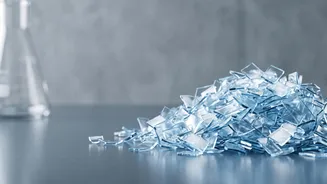
Let's clear this up immediately: no one is suggesting we grind up plastic bottles and bake them into our food. The mental image of chewing on a piece of PET (polyethylene terephthalate) plastic is unsettling for a reason—it’s indigestible and harmful.
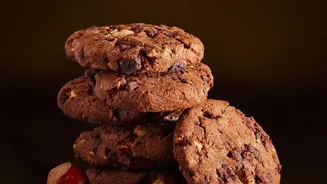
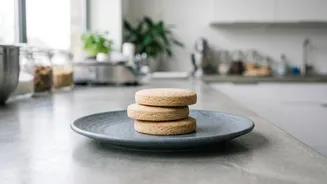
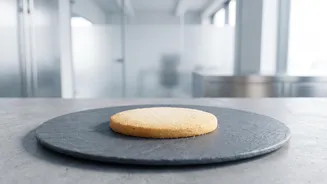
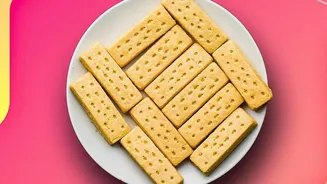
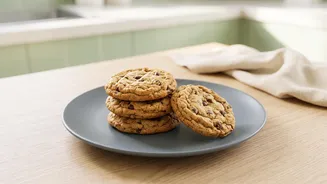
The headline-grabbing concept of a 'plastic cookie' is a simplification of a far more elegant and complex scientific process. It’s not about physically incorporating plastic into food, but about chemically transforming it at a molecular level into something entirely new, safe, and surprisingly familiar. The fear comes from misunderstanding the word 'derived'. Just as a cake is derived from raw eggs and flour but is a completely different substance, the end product here is fundamentally different from its plastic starting point.
The Reality: A Chemical Transformation
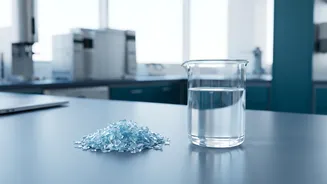
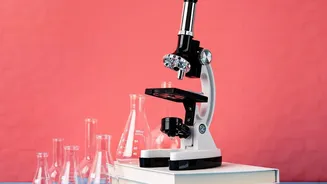
The real story is one of innovative upcycling. Scientists, notably a team from the University of Edinburgh, have developed a process to turn plastic waste into vanillin. Vanillin is the molecule responsible for the distinct flavour and aroma of vanilla. The process begins by breaking down PET plastic into its basic chemical unit, a compound called terephthalic acid (TA). From there, the scientists introduced genetically engineered E. coli bacteria. These microbes were specifically programmed to 'eat' the TA and, through a series of biological reactions, convert it into vanillin. In one study, this method successfully converted about 79% of the terephthalic acid into the valuable flavouring compound. The final product is chemically identical to the vanillin that is already widely used in the food industry. It’s a powerful demonstration of how we can perceive plastic not just as waste, but as a carbon resource for making valuable new products.
A Familiar Flavour
What makes this breakthrough so interesting is its end product: vanillin. This isn't some strange, lab-created substance we’ve never encountered before. In fact, you've almost certainly consumed it many times. While some vanillin comes from expensive and labour-intensive vanilla beans, the vast majority—around 85%—is synthesized artificially. Historically, synthetic vanillin has been made from petrochemicals derived from fossil fuels or from lignin, a byproduct of the paper industry. So, the ice cream, baked goods, and fragrances you enjoy are likely flavoured with a synthetic vanillin that is chemically identical to the one produced from plastic. The global demand for vanillin is enormous, far exceeding what can be supplied by natural vanilla beans alone. This new method offers a more sustainable source, turning a pollutant into a sought-after commodity.
More Than Just a Sweet Treat
While a plastic-derived cookie is a fascinating proof of concept, the true goal is much larger. It’s about tackling the global plastic crisis. Every year, we produce millions of tonnes of PET waste, and only a tiny fraction is effectively recycled. Most recycling just downcycles plastic into lower-quality products like carpets or fibres, which eventually still end up as waste. This process represents a true upcycling—transforming low-value waste into a high-value chemical. This creates a powerful economic incentive to collect and process plastic bottles, which currently lose about 95% of their material value after a single use. More recent work, presented in August 2026, has even explored using microbes to convert plastic and agricultural waste into edible proteins for things like 3D-printed cookies, with potential applications for deep-space missions or disaster relief.
Safety, Scale, and the Future
The obvious question is whether this plastic-derived vanillin is safe for human consumption. While researchers state that the resulting molecule is chemically identical to existing vanillin, further testing is required before it could be officially approved for use in food. The other major hurdle is scale. The process has been successful in the lab, but scaling it up to an industrial level to handle vast quantities of plastic waste presents significant engineering challenges. Scientists are working on tweaking the process to increase the conversion rate and efficiency. This innovation is still in its early stages, but it offers a tantalizing glimpse into a future where synthetic biology and circular economy principles can turn one of our most persistent environmental problems into a sustainable solution.