






A Pioneer in Indian Space-Tech
Founded in 2021 by a group of IIT Madras alumni, GalaxEye Space is one of the brightest stars in India's burgeoning private space sector. The startup aims to build a constellation of Earth observation satellites, but with a unique twist. Their vision
is to fuse two powerful sensor technologies—Synthetic Aperture Radar (SAR) and traditional optical imaging—onto a single satellite. This 'OptoSAR' technology would be a world first, designed to provide all-weather, day-and-night imaging without the limitations of cloud cover or darkness that hamper purely optical systems. The goal is to deliver continuous, high-resolution data for sectors like defence, disaster management, agriculture, and infrastructure.
The Ambitious 'Drishti' Mission
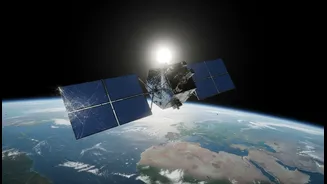
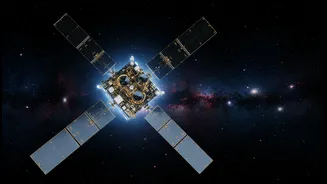
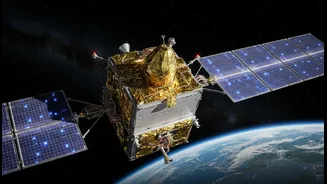
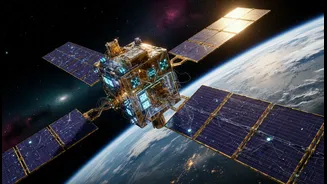
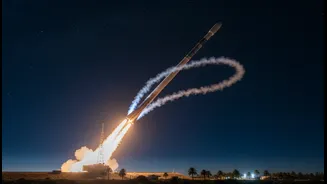
Mission Drishti was the company's first major step toward this goal. The Drishti-1 satellite, launched on May 3, 2026, aboard a SpaceX Falcon 9 rocket, was designed as a technology demonstrator. Weighing approximately 190 kg, it was India's largest privately developed Earth observation satellite at the time of its launch. Its primary objective was to validate GalaxEye's proprietary OptoSAR technology in the harsh environment of space and prove that a single satellite could indeed provide fused, analysis-ready imagery. This capability would be a game-changer, particularly for a tropical country like India, where monsoon clouds can obscure ground views for months.
When a Solar Storm Intervened
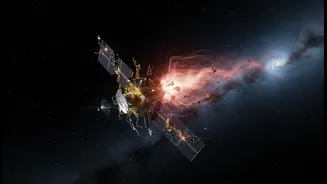
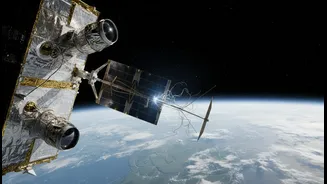
Following the launch, the mission initially proceeded as planned. GalaxEye successfully established communication with Drishti-1 from its mission control centre in Bengaluru. The satellite completed a major portion of its Launch and Early Orbit Phase (LEOP), validating critical systems related to deployment, attitude control, and onboard computing. However, during the final stage of this phase, the spacecraft encountered a severe geomagnetic solar storm. According to the company, initial analysis suggests that radiation from this powerful space weather event impacted a critical onboard system. Communication with the satellite became intermittent before being lost altogether, and the company has stated that the likelihood of recovery is low.
Valuable Lessons From a Setback
Despite the loss of its primary mission, GalaxEye maintains that the venture was far from a total failure. This is the crux of the 'engineering insights' mentioned in the headline. According to CEO Suyash Singh, the mission successfully validated the core technologies and operational processes needed to build and operate advanced spacecraft. For several weeks, the satellite's systems performed as expected, providing invaluable real-world data on everything from ground control software to the performance of various subsystems in orbit. The team gained firsthand experience in mission operations, from launch to in-orbit manoeuvres, which is a critical capability for any space company.
Strengthening for the Future
The anomaly has provided a steep, but vital, learning curve. GalaxEye has stated that the insights gained will directly strengthen future missions. One key takeaway, according to Singh, is the need to accelerate the company's transition toward bringing more of its supply chain, manufacturing, and satellite development in-house. This move is aimed at gaining greater visibility and control over the entire value chain, which can help in building more robust and resilient systems. The experience with the solar storm will also inform the design of its next-generation spacecraft, likely leading to enhanced radiation hardening and other protective measures. GalaxEye has already announced plans to launch two new, more advanced OptoSAR satellites within the next 24 months, incorporating the hard-won lessons from Drishti-1.