

To Build Trust in the Fabric
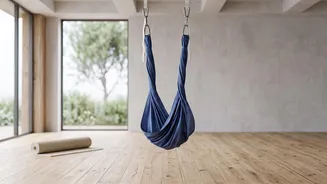
The single most important part of your first aerial class is learning to trust the equipment. The silk hammock is designed to hold significant weight, but your body and mind don't know that yet. A simple session focuses on foundational movements: sitting
in the hammock, leaning into it for support, and gentle standing poses where the fabric assists your balance. These basic interactions teach you how the silk responds to your weight and movement without the added pressure of complex choreography. Mastering the feeling of being supported is the first and most crucial step. Rushing past this stage can create a sense of instability that makes it harder to relax and enjoy the rest of the class.
To Prevent Dizziness and Discomfort
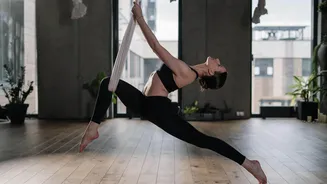
Going upside down can be a strange sensation, and your body needs time to adjust. Inversions, where your head is below your heart, can cause dizziness or nausea for some beginners as blood rushes to the head. A good introductory class will likely include only one or two gentle, highly supervised inversions. Keeping the session simple allows your instructor to guide you slowly and ensure you feel secure. It also helps you get used to the unique pressures of the fabric, which can feel tight around certain body parts—a normal sensation known as compression. Overdoing it with too many flips and tricks on day one can lead to sensory overload and physical discomfort, potentially souring an otherwise amazing experience.
To Focus on Foundational Skills and Safety
Aerial yoga isn't just about the poses; it's about the technique. A simple first class prioritizes learning the fundamentals, such as proper hand grips, how to wrap the fabric securely, and how to engage your core to maintain stability. These skills are the building blocks for every other move you'll learn. Trying to execute advanced poses without a solid foundation isn't just difficult, it's unsafe. Instructors design beginner classes to build strength and awareness from the ground up. By focusing on simple, controlled movements, you learn to move with intention and mindfulness, which reduces the risk of strain and helps you build the body awareness needed for more dynamic flows later on.
To Truly Feel the Benefits
Some of the most profound benefits of aerial yoga come from its simplest applications. The gentle decompression of the spine while hanging can provide immediate relief for back tension. The support of the hammock allows you to sink deeper into stretches without straining your joints, improving flexibility in a safe, passive way. If you're busy trying to keep up with complicated sequences, you miss the opportunity to tune into these sensations. A simple class gives you the mental space to notice how your body feels lighter, how your spine lengthens, and how your muscles release. This connection is what makes the practice so rewarding and is often the reason people come back for more.
To Build Confidence for the Next Class
The goal of your first class isn't to perform a Cirque du Soleil routine; it's to have a positive experience that makes you want to return. Successfully mastering a few simple poses and feeling the joy of floating in the fabric is far more empowering than struggling through advanced ones. A welcoming, low-pressure environment focused on basics helps build immediate confidence. It proves to you that you are strong enough and capable enough to do this. Leaving your first session feeling accomplished and excited, rather than defeated or overwhelmed, is the key to turning a one-time trial into a consistent and fulfilling practice.