



The Moon’s Communication Blind Spot
Communicating in space has always been a challenge of direct line-of-sight. If you can't 'see' a spacecraft from a ground station on Earth, you can't talk to it. This has been a fundamental limitation of lunar exploration. The Moon's far side, permanently
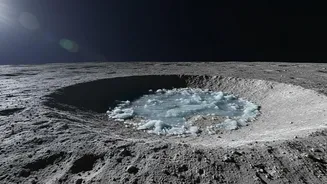
facing away from us, is a total communication black hole. Even missions on the near side can lose contact when they travel into craters or behind lunar mountains. For the Artemis program, which aims to establish a sustained human presence on the Moon, these blind spots are not just inconvenient; they are a critical risk to safety and mission success. To build habitats, conduct complex science, and ensure astronauts are always connected, a more robust solution is needed.
Introducing LunaNet: An Internet for the Moon
NASA's answer to this problem is LunaNet. It isn't just a single satellite, but a flexible and scalable 'internet' for the Moon. The goal is to create an interconnected network of orbiters, landers, and surface assets that can communicate with each other and relay data back to Earth, much like how our terrestrial internet uses a web of routers and cell towers. This architecture is designed to be a network of networks, meaning it's open for international partners and commercial companies to add their own nodes, expanding its capability. This initiative, led by NASA's Space Communications and Navigation (SCaN) program, is the digital backbone required for a permanent lunar outpost.
How the Lunar Network Will Work
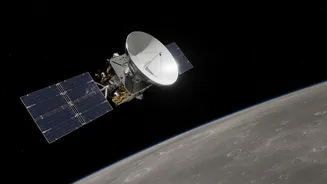
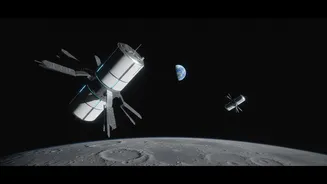
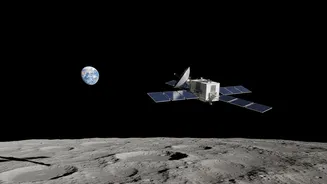
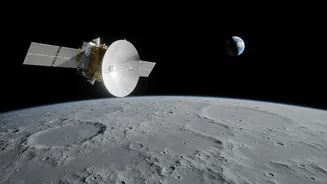
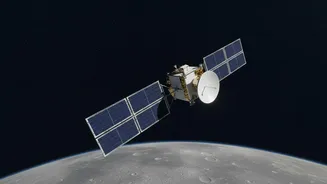
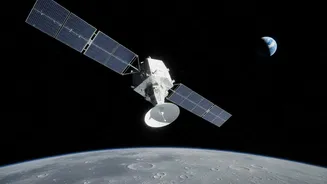
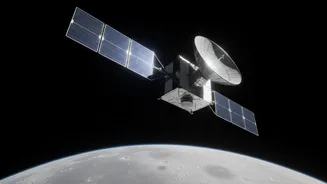
The architecture of LunaNet consists of three main parts. First are the Earth-based ground stations, like the Deep Space Network, which serve as the primary link to our planet. Second, and most crucial, are the relay satellites placed in strategic lunar orbits. These satellites act as communication hubs, constantly circling the Moon to ensure there is always a node in sight of any surface mission. Finally, there are the users on and around the Moon: astronauts, rovers, scientific instruments, and habitats. A signal from an astronaut on the far side could hop to a relay satellite, which then beams it back to Earth, all in near-real-time. This eliminates the dependency on direct line-of-sight and provides continuous coverage.
More Than Just a Phone Call Home
This network is about much more than just voice communication. LunaNet is designed to provide three core services: networking, navigation, and science. The networking service will enable high-speed data transfer, allowing for the streaming of high-definition video from the lunar surface and the rapid return of massive scientific datasets. The Position, Navigation, and Timing (PNT) service will function like a lunar GPS, giving astronauts and rovers precise location data crucial for navigating the terrain and for safe landings and ascents. This is especially important for operating autonomous rovers and for coordinating multiple missions at once. The network will also distribute alerts for events like solar storms.
A Commercial Highway in Cislunar Space
NASA is not building this monumental infrastructure alone. The agency is actively fostering a commercial space economy through its Commercial Lunar Payload Services (CLPS) initiative. NASA is contracting with private companies like Intuitive Machines and Firefly Aerospace to deliver payloads and build key parts of the network. For instance, NASA recently delivered a sophisticated navigation receiver to Intuitive Machines for integration on their first lunar relay satellite, Altus-1. Companies like Nokia are even developing 4G/LTE networks for the lunar surface. This approach not only accelerates development but also creates a new market for commercial communication and navigation services for future private and international missions to the Moon.