







The Vision 2030 imperative
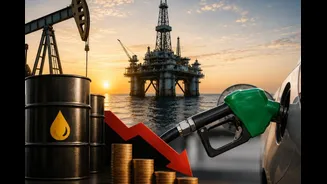
Saudi Arabia's nuclear ambition is a cornerstone of Vision 2030, a massive economic and social reform blueprint spearheaded by Crown Prince Mohammed bin Salman. The goal is to wean the Kingdom's economy off its deep-seated oil dependency. A key challenge
is soaring domestic energy consumption. The country uses a significant portion of its own oil production—roughly a quarter—to generate electricity and desalinate water, especially during the scorching summer months. This internal consumption eats directly into the volume of crude oil available for export, which remains the primary source of national revenue. By shifting to nuclear power for domestic electricity, Saudi Arabia aims to free up millions of barrels of oil for the more lucrative export market. This strategy is not just about oil; it’s part of a broader energy diversification that includes ambitious targets for solar and wind power, aiming for renewables to constitute 50% of the energy mix by 2030.
A Global Power Play
The quest for nuclear capability is not just an economic decision; it is a profound geopolitical statement. For years, Saudi Arabia has watched its regional rival, Iran, develop its own nuclear program, creating a significant strategic imbalance. While Riyadh has publicly supported a nuclear-free Middle East, officials have also made it clear they would not hesitate to pursue a nuclear weapon if Iran were to develop one. This regional dynamic has turned the bidding process for Saudi Arabia’s first nuclear power plants into a global competition. The United States, China, Russia, and France have all been vying for the multi-billion dollar contracts. In July 2026, the US and Saudi Arabia signed a landmark civil nuclear cooperation agreement, positioning American companies to play a central role. This move is seen by Washington as a way to both secure a major economic partnership and to maintain influence while preventing competitors like China and Russia from gaining a strategic foothold in the Kingdom's critical infrastructure.
The Enrichment Controversy
The primary point of contention in Saudi Arabia's nuclear file is the issue of uranium enrichment. Enrichment is the process of concentrating uranium to make it usable in reactors, but the same technology can be used to produce weapons-grade material. The United States has historically insisted that its partners forgo domestic enrichment and reprocessing, a standard known as the "123 Agreement gold standard," which it successfully applied to the United Arab Emirates. However, recent reports suggest the July 2026 deal with Saudi Arabia may permit the Kingdom to enrich its own uranium, a significant departure from past US policy. This has sparked alarm among nonproliferation experts, who fear it could set a dangerous precedent and trigger a nuclear arms race in the volatile Middle East. Saudi officials argue that as a sovereign nation with its own uranium deposits, they have the right to develop the entire nuclear fuel cycle for peaceful purposes.
Challenges on the Horizon
Despite the Kingdom's wealth and political will, the path to nuclear power is fraught with challenges. Building and operating nuclear reactors requires immense capital investment, a highly skilled workforce, and a robust regulatory framework. Saudi Arabia has been building this infrastructure for years, establishing a regulatory commission in 2018 and a national nuclear energy holding company in 2022. The International Atomic Energy Agency (IAEA) has noted the country's progress while emphasizing the need for comprehensive safeguards. Beyond the technical and financial hurdles, the program will continue to face intense international scrutiny. The global community, and particularly the IAEA, will be watching closely to ensure that every step of the civilian program remains transparent and verifiably peaceful, a test that will define the Kingdom's role on the world stage for decades to come.