






A New Horizon: The 2027 Target
The long-awaited Mumbai-Ahmedabad High-Speed Rail Corridor has a significant new milestone in sight. According to recent announcements by Union Railway Minister Ashwini Vaishnaw, the first trials for the bullet train are slated to begin around May or June
2027. This marks a pivotal moment for the 508-kilometre project, which aims to connect India's financial capital with the economic hub of Ahmedabad using Japan's renowned Shinkansen technology. The initial trials will likely take place on the Gujarat portion of the route, with sections like Surat to Bilimora and Vapi to Surat seeing the most advanced progress. Officials have indicated that after a testing period of two to four months, the first commercial services could be inaugurated. This phased rollout is a pragmatic approach, focusing on getting sections operational as construction is completed across different terrains.
Gauging the Progress: How Far We've Come
The journey to this point has been a marathon of engineering and perseverance. As of August 2026, construction has advanced significantly. Across the entire corridor, pier work has been completed on over 450 kilometres of the route, while more than 350 kilometres of the elevated viaduct, which will carry the train, is now in place. Progress in Gujarat has been particularly swift, with the entire 352-kilometre stretch seeing foundational work completed. In Maharashtra, which faced earlier delays due to land acquisition challenges, work is now in full swing, with construction progressing on stations in Thane, Virar, and Boisar. Furthermore, all land required for the project has now been acquired, removing one of the most significant hurdles that had previously slowed momentum. Work is also advancing on 12 stations, major river bridges, and the complex 7-kilometre undersea rail tunnel in Thane Creek.
The Shinkansen Experience in India
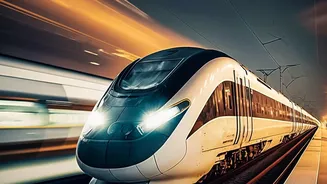
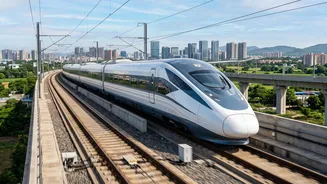
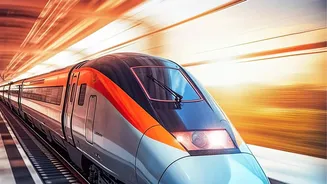
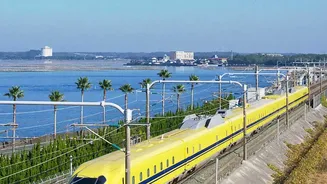
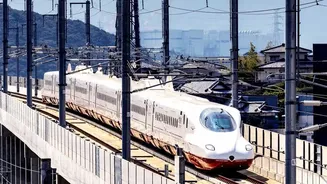
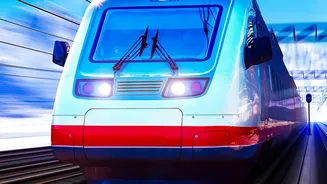
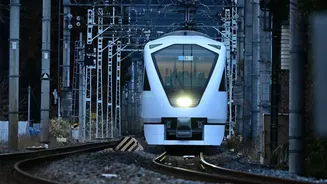
At the heart of the project are the E5 Series Shinkansen trains, known globally for their safety, speed, and punctuality. These trains are designed to operate at a speed of 320 km/h, a significant leap for Indian Railways. This will slash travel time between Mumbai and Ahmedabad from the current 6-8 hours by conventional rail to just over two hours for limited-stop services. The trains themselves are a marvel of technology, featuring an aerodynamic design to minimise noise and air resistance. Passenger comfort is a priority, with spacious seating, climate-controlled interiors, and advanced safety systems including automatic braking and anti-derailment mechanisms. While Japan will supply the initial trains, a 'Make in India' component is also in the works, aiming for domestic manufacturing of high-speed trains in the future.
Beyond Speed: The Broader Impact
The bullet train corridor is more than just a transportation project; it's envisioned as an economic catalyst. The National High-Speed Rail Corporation Limited (NHSRCL), the body executing the project, sees it as a driver of growth, connectivity, and technological advancement. The corridor is expected to foster development in the towns and cities along its route, with 12 stations planned in total, including key stops at Surat, Vadodara, and Vapi. This improved connectivity is already sparking interest in real estate markets near the planned stations. Moreover, the project involves significant technology transfer from Japan, providing Indian engineers with invaluable experience in high-speed rail construction and operations. As India plans for more high-speed corridors, including routes like Delhi-Varanasi and Mumbai-Nagpur, the lessons learned and technologies adopted from the Mumbai-Ahmedabad line will be foundational.