


Poland’s Underground Salt Cathedral
Deep beneath the Polish town of Wieliczka lies a world carved entirely from salt. The Wieliczka and Bochnia Royal Salt Mines operated from the 13th century until 1996, making them one of the oldest in the world. But this is no ordinary mine. The story
here is one of deep faith and incredible artistry. Over centuries, generations of miners carved out not just tunnels but breathtaking chapels, intricate altarpieces, and life-sized statues from the grey salt rock. The crown jewel is the Chapel of St. Kinga, a subterranean church complete with salt chandeliers, where every detail is hewn from the mine's natural resource. It’s a powerful testament to how human creativity and spirituality flourished in one of the most challenging environments imaginable, transforming an industrial site into a sacred space.
Croatia’s Ever-Changing Waterfalls
Plitvice Lakes National Park is a place of dynamic natural beauty, a story written in water, limestone, and time. This Croatian wonderland consists of 16 terraced lakes, linked by a series of waterfalls and cascades that shimmer in shades of turquoise and emerald. The park’s distinct story is one of constant creation. The landscape is built by tufa, a type of porous limestone deposited by the calcium carbonate-rich waters. These tufa barriers are alive, growing at a rate of about one centimetre per year, meaning the shape and flow of the waterfalls are always changing. The park is also a story of resilience. It was the site of armed conflict during the Croatian War of Independence in the early 1990s but has since been restored, becoming a powerful symbol of nature's ability to heal and endure.
Romania’s Fortified Saxon Villages
Scattered across the rolling hills of Transylvania are a series of villages that tell a story of community, defense, and cultural survival. Founded in the Middle Ages by German settlers known as Transylvanian Saxons, these villages are unique for their fortified churches. Facing the constant threat of Ottoman and Tatar invasions, the communities fortified the most important building they had: their church. Thick defensive walls, watchtowers, and protected passages were built around the central church, creating a sanctuary where villagers could retreat with their livestock and valuables during an attack. Sites like Biertan and Viscri aren't just architectural marvels; they are perfectly preserved examples of a settlement pattern where sacred and secular life were intertwined for mutual protection, representing a unique chapter in the history of a minority group shaping its own defensible world.
Czech Republic’s City of a Hundred Spires
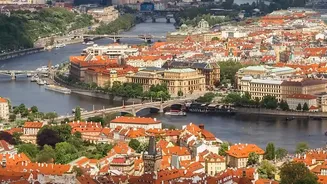
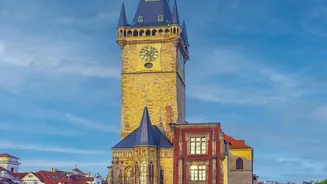
The Historic Centre of Prague is more than just a beautiful city; it’s a living textbook of European architecture and a story of intellectual and cultural endurance. Spared from major destruction during the World Wars, Prague’s city center is a remarkable ensemble of Gothic, Renaissance, and Baroque buildings. Its story is one of a city that has repeatedly been at the heart of European history—as the capital of the Holy Roman Empire under Charles IV, a center of the Protestant Reformation, and the stage for the Velvet Revolution in 1989. Walking from the Astronomical Clock in the Old Town Square, across the statue-lined Charles Bridge, and up to the vast Prague Castle complex, you are tracing the steps of kings, alchemists, and revolutionaries. The city's survival is its story, making it a rare example of continuous urban development over a millennium.
Hungary’s Danube-Spanning Masterpiece
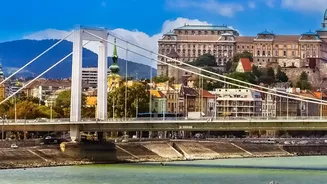
Budapest, often called the 'Pearl of the Danube,' tells the story of a nation's ambition and golden age. The UNESCO site encompasses the banks of the Danube, the Buda Castle Quarter, and the grand Andrássy Avenue. This is the story of three cities—Buda, Óbuda, and Pest—uniting in 1873 to create a modern metropolis that would rival Vienna. The Buda Castle Quarter, first established in the 13th century, chronicles the city's medieval and royal past. In contrast, Andrássy Avenue, lined with magnificent Neo-Renaissance mansions and the State Opera House, showcases the incredible optimism and prosperity of the late 19th century. Together, they narrate the evolution of a capital, from a medieval stronghold to a glittering symbol of the Austro-Hungarian Empire's cultural and architectural might.