



A New Tool for a Big Question
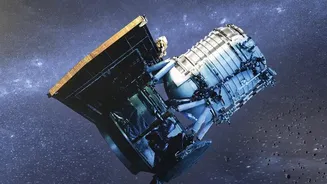
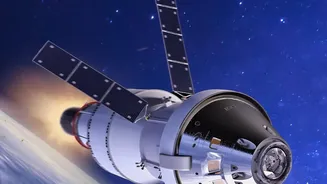
NASA has initiated a new mission called Pandora, the first under its Astrophysics Pioneers program, which uses small satellites to tackle major scientific questions. Launched into low Earth orbit, the Pandora mission recently began its scientific operations,
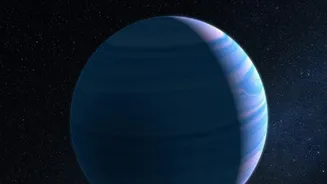
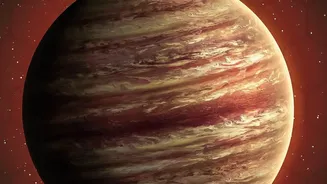
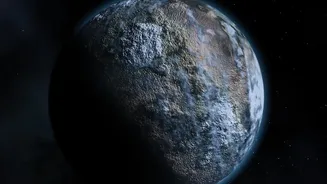
targeting at least 20 exoplanets—planets orbiting stars other than our sun. Its primary goal is to perform a detailed survey of their atmospheres. Unlike giant, all-purpose observatories, this mission is highly specialized. Its key task is to solve a persistent problem in exoplanet research: distinguishing the chemical signature of a planet's atmosphere from the confounding 'noise' created by its host star. By observing both the planet and its star simultaneously, Pandora aims to provide cleaner, more reliable data about what these alien atmospheres truly contain.
The SmallSat Revolution
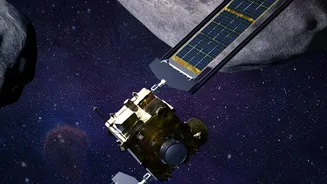
The mission's reliance on a SmallSat—a satellite roughly the size of a mini-fridge—represents a major shift in the business of space exploration. For decades, planetary science was dominated by large, multi-billion-dollar flagship missions. While incredibly powerful, these take years, sometimes decades, to develop and launch. SmallSats, by contrast, are transforming the industry by being more cost-effective and quicker to build. This affordability and speed allow for more focused, high-risk, high-reward science. Instead of putting all resources into one large mission, agencies like NASA can now deploy fleets of smaller, specialized probes to answer specific questions, accelerating the pace of discovery. This approach also opens up space access to a wider range of research institutions and commercial partners.
Why Reading Atmospheres Matters
An atmosphere is the key to understanding a planet's potential for life. It governs a planet's climate and shields its surface from harsh stellar radiation. The presence of certain gases, such as water vapor, methane, or oxygen, can act as biosignatures—tantalizing hints that life could exist. To study an atmosphere light-years away, scientists use a technique called transit spectroscopy. When an exoplanet passes in front of its star from our point of view, a tiny fraction of the starlight filters through the planet's atmosphere. The gases in that atmosphere absorb specific colors of light, leaving behind a unique chemical fingerprint that telescopes can read. This allows astronomers to deduce the atmosphere's composition without ever directly seeing the planet.
Untangling Light from Stars and Planets
The challenge with transit spectroscopy is that stars are not perfectly stable. They have active regions, like sunspots, that can mimic or obscure the very signals scientists are trying to detect in a planet's atmosphere. This is the problem Pandora was built to solve. It will use long, dedicated observations to monitor each target star in visible light while simultaneously measuring the atmospheric data from the transiting planet in infrared light. This dual-pronged approach will allow researchers to effectively subtract the star's activity from the data, isolating the pure signal from the exoplanet's atmosphere. This refined data will be crucial for missions like the James Webb Space Telescope (JWST), helping to confirm and clarify its own atmospheric findings.
Pioneering a New Era of Exploration
Missions like Pandora and the proposed ESCAPE (Extreme-ultraviolet Stellar Characterization for Atmospheric Physics and Evolution) concept are at the forefront of a new strategy for NASA. They are not intended to replace flagship missions like JWST but to complement them, performing targeted reconnaissance that makes the big telescopes more efficient. By studying how stellar radiation can strip away a planet's atmosphere, these missions will help scientists narrow down which worlds are the most promising candidates for long-term habitability. This approach, blending the power of large observatories with the agility of SmallSats, marks a smarter, more sustainable, and ultimately faster way to explore the cosmos and search for worlds beyond our own.