






A Market Tilting Towards the Top
The shift in the National Capital Region's (NCR) real estate market is not just a trend; it's a seismic restructuring. Data reveals a dramatic pivot towards high-end properties. Homes priced above ₹1 crore now dominate new launches and sales, accounting
for a staggering 84% of NCR's residential sales in the first half of 2026. This is a sharp contrast to previous years. In 2020, for example, the affordable housing segment made up 62% of all new units launched in the region. By the first half of 2025, that share had collapsed to a mere 5%. This isn't just about developers adding a few more high-end towers; it represents a fundamental change in strategy, where the focus has moved decisively towards the top of the pyramid, leaving a void in its wake.
The Economics Behind the Exclusivity
Developers are not making this shift in a vacuum. A confluence of economic pressures has made the mass-market segment increasingly challenging. Soaring input costs are a primary driver. Between 2021 and 2025, residential construction costs rose by 34%, while land prices in prime NCR areas like Gurugram surged by as much as 130% in a similar period. Faced with these escalating expenses, developers find that luxury projects offer far healthier profit margins. The buyer profile in the premium segment is also more resilient. High-net-worth individuals and NRIs are less sensitive to interest rate hikes and often see real estate as a stable asset amid global uncertainty, ensuring steady demand even when the broader market is cautious. This creates a powerful incentive to cater to a smaller, but more profitable, pool of affluent buyers.
The Squeeze on the 'Missing Middle'
The consequence of this luxury boom is a severe supply crunch for the middle and lower-middle-income segments. This is not just a perception; the numbers confirm a sharp decline in the availability of budget-friendly homes. The problem is twofold: not only are fewer affordable units being built, but the definition of 'affordable' itself is being stretched. Spiraling land and construction costs have pushed the baseline price of all housing upwards. As a result, projects that might have once been considered mid-segment are now priced in a range that is beyond the reach of the average salaried homebuyer. This creates a 'missing middle' in the market, where the largest pool of demand from first-time buyers and middle-class families finds the fewest available options. Even once-affordable satellite towns are seeing rapid price appreciation, offering a cheaper alternative but no longer a truly cheap one.
A Question of Urban Development
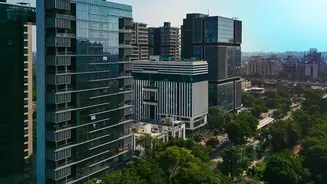
The increasing focus on luxury real estate is more than a simple market correction; it reflects a broader shift in urban development philosophy. The post-pandemic era has seen a genuine change in buyer preferences, with an increased demand for larger homes, better amenities, and more open spaces, which luxury projects are well-positioned to provide. However, when the market overwhelmingly caters to these desires, it risks creating cities that are exclusive rather than inclusive. Gurugram, for instance, has firmly established itself as a major luxury housing hub, with corridors along Golf Course Road and Dwarka Expressway seeing a flurry of high-end launches. While this fuels economic activity and satisfies a certain demographic, it also accelerates the pricing out of a majority of the population who form the backbone of the city's workforce.