



Growing in Water: Minimalist and Mess-Free
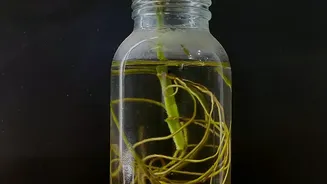
Growing a money plant in water is incredibly popular for its clean, minimalist appeal. Watching the delicate white roots unfurl in a clear glass jar or vase offers a unique visual treat. This method is perfect for beginners, small apartments, or anyone
who dreads dealing with soil and potential messes. Propagation is also a breeze; simply place a healthy cutting with a few nodes into a container of water, and you'll see roots emerge within a couple of weeks. The primary advantage here is simplicity and aesthetics. It’s an easy way to add a touch of green to desktops, shelves, and kitchen counters with minimal fuss.
The Water Care Routine
While low-maintenance, a money plant in water still has needs. The most crucial task is changing the water every 5 to 7 days. This replenishes oxygen for the roots and prevents the growth of bacteria and algae. It's best to use room temperature water; if you're using tap water, let it sit out for 12-24 hours to allow chlorine to evaporate. Since water contains no nutrients, you'll need to provide them. Add a few drops of a balanced liquid fertiliser or a special hydroponic nutrient solution every 4 to 6 weeks during the growing season to encourage healthy leaves and steady growth.
Growing in Soil: Lush and Robust Growth
For a money plant that is lush, bushy, and grows vigorously, soil is the superior choice. Soil is the plant's natural environment, providing a complex structure for roots to anchor and access a steady supply of nutrients, water, and oxygen. Plants grown in soil tend to develop larger leaves, stronger stems, and have a much faster growth rate compared to their water-grown counterparts. You’ll need a pot with drainage holes and a well-draining potting mix. A mixture of garden soil, cocopeat, and compost or perlite works well to retain moisture without becoming waterlogged.
The Soil Care Routine
The key to caring for a soil-based money plant is proper watering. Overwatering is the most common mistake and can lead to root rot. Always check the top inch or two of soil; if it feels dry to the touch, it's time to water. Water thoroughly until it drains from the bottom, then allow it to dry out again. During the main growing seasons (spring and summer), feed the plant with a balanced fertiliser once a month. In winter, when growth slows, you can reduce both watering and fertilising. Pruning the vines will encourage a bushier, fuller appearance.
The Trade-Offs: Growth vs. Maintenance
The choice between water and soil boils down to a trade-off between growth potential and maintenance effort. Water offers slower growth but is incredibly easy to set up and requires little more than weekly water changes and occasional feeding. It's ideal for decorative purposes and propagation. Soil, on the other hand, supports much faster and more robust growth, but requires more attention to watering schedules, soil quality, and pest control. Common issues in water include algae and nutrient deficiencies, while soil-grown plants can be susceptible to root rot from overwatering and pests like mealybugs or spider mites.
Making the Switch: From Water to Soil
Many people start a cutting in water and later decide they want the fuller growth that soil provides. Thankfully, you can successfully transfer a water-rooted money plant to soil. The roots developed in water are more delicate and adapted differently than soil roots, so the transition needs to be gentle. Once your cutting has developed roots that are at least an inch long, plant it in a small pot with a well-draining potting mix. Keep the soil consistently moist (but not soggy) for the first few weeks to help the roots acclimate to their new environment. Avoid the temptation to move it to a very large pot right away, as this increases the risk of overwatering.