



The Sun's Hidden Whirlpools
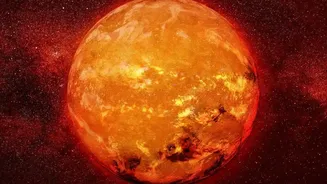
Imagine looking at the Sun’s surface, a boiling sea of plasma called the photosphere. It’s covered in a pattern of bright, bubbling 'granules'—convection cells larger than many countries on Earth. Recent discoveries have peeled back another layer of this
complexity. Using the world's most powerful solar telescope, scientists have spotted something new at the edges of these granules: minuscule vortices, some just 20 kilometres across. These are tiny whirlpools of superheated gas, swirling like miniature tornadoes. This is a groundbreaking observation, revealing motion at a scale that was previously impossible to see, a feat compared to spotting a small coin from 180 kilometres away.
A New Window on Our Star
This discovery was made possible by the Daniel K. Inouye Solar Telescope in Hawaii, a marvel of modern engineering. Its massive four-metre mirror can resolve details on the Sun's surface with unprecedented clarity. By combining these high-resolution images with advanced computer simulations, researchers from institutions across the US and Germany confirmed that what they were seeing was real. They identified the phenomenon as a classic process in fluid dynamics known as the Kelvin-Helmholtz instability. This occurs when two fluids or plasmas flow past each other at different speeds, creating a shear force that curls into vortices. While we see this effect in clouds and ocean waves on Earth, this is the first time it has been directly observed on the Sun's fiery surface.
The Small Engine of a Giant Eruption
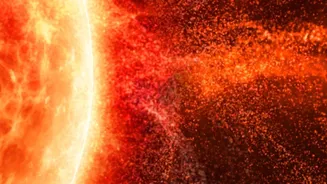
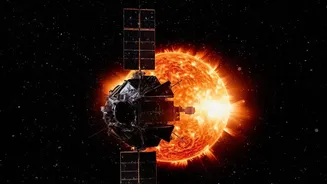
This is where the story shifts from a curious observation to a potentially profound insight into the Sun’s behaviour. The headline’s claim that these small swirls 'could influence' larger events hinges on the Sun's magnetic field. Scientists theorise that these countless tiny vortices are constantly grabbing and twisting the magnetic field lines that thread through the solar plasma. Think of it like repeatedly twisting a rubber band. Each individual twist adds a small amount of energy, but millions of them working together can store an enormous amount of tension. Eventually, this twisted magnetic field becomes highly unstable and can snap in a process called magnetic reconnection, explosively releasing its stored energy. This release could be the trigger for everything from small-scale nanoflares to gigantic solar flares and coronal mass ejections (CMEs)—the very events that cause space weather.
Why This Matters for Us in India
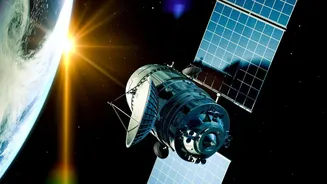
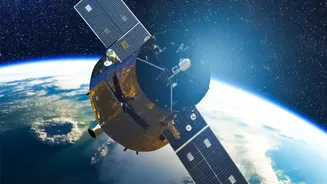
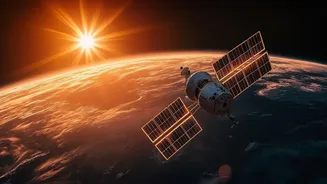
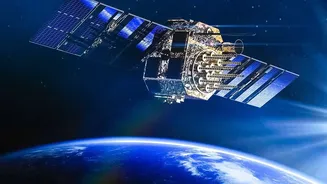
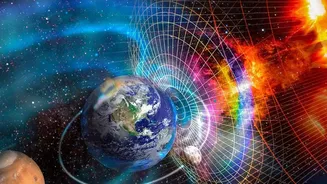
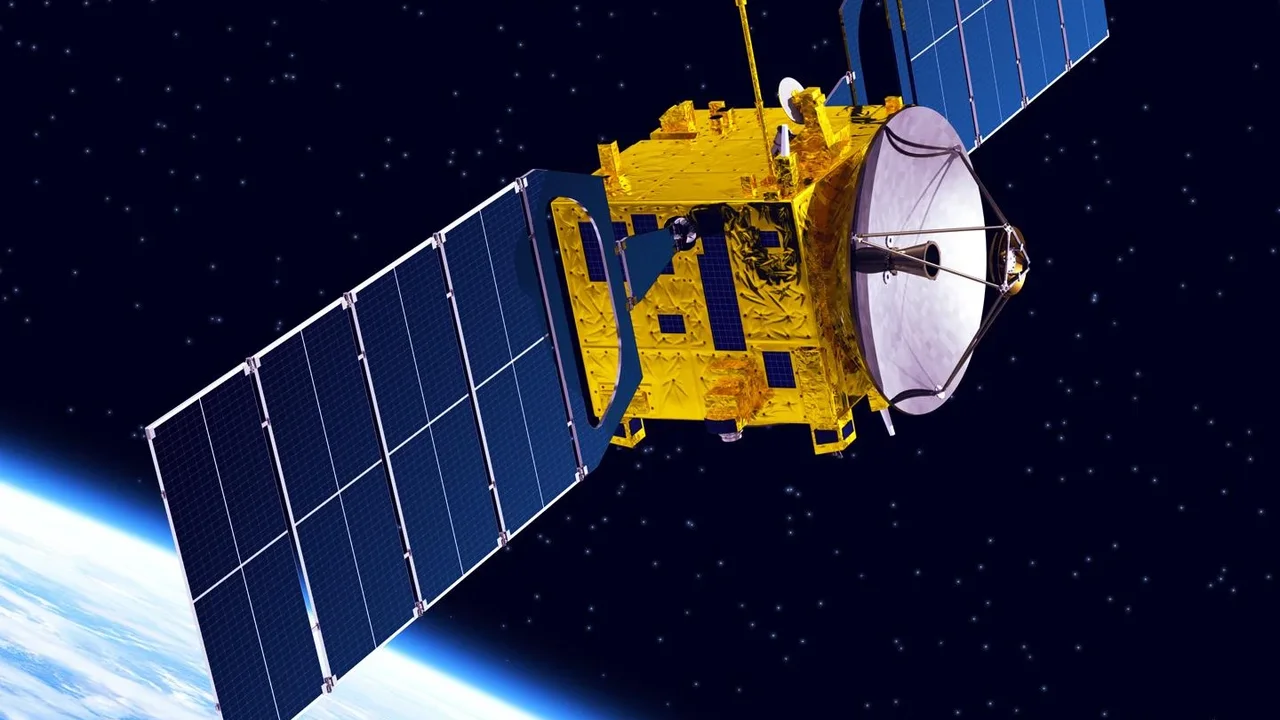
While these processes happen 150 million kilometres away, their consequences are felt right here on Earth. Solar flares and CMEs can send a barrage of charged particles towards our planet, creating geomagnetic storms. These storms can disrupt and damage the technology we rely on daily. For a digitally-driven nation like India, the stakes are high. Our growing network of satellites for communication, navigation (like GPS), and broadcasting are all vulnerable. Major solar storms can interfere with these signals and even pose a risk to our power grids. While India's lower latitude provides some natural protection, organisations like ISRO actively monitor solar activity to safeguard our critical infrastructure. Understanding the fundamental triggers of these storms is the first step toward creating more accurate space weather forecasts, giving us more time to protect the technology that powers our modern lives.