





Why Your Plant Plays Favourites With the Window
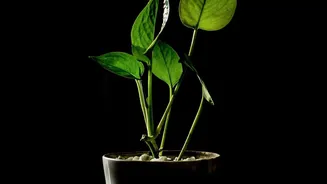
Have you ever wondered why your indoor plants always seem to be reaching for the nearest window, sometimes creating a sparse side that faces the room? This isn't your plant being difficult; it's a natural survival instinct called phototropism. Plants
depend on light for photosynthesis, the process of converting light into energy. To maximise their access to this vital resource, they will physically grow and bend towards the strongest light source available. This response ensures the leaves and stems receive as much light as possible to thrive, especially indoors where light is often limited to a single direction.
The Simple Secret: Regular Rotation
The single most effective 'trick' to prevent your houseplant from growing in only one direction is remarkably simple: rotate it. By regularly turning your plant, you ensure that all sides receive a more balanced exposure to light over time. This simple action counteracts the plant's tendency to lean and encourages its stems and leaves to grow more evenly, resulting in a fuller, more symmetrical, and aesthetically pleasing appearance. Think of it as giving every part of your plant its fair share of the sun. It’s a foundational habit in plant care that experts swear by for maintaining healthy, attractive indoor greenery.
The Science of the Lean
The mechanism behind phototropism is controlled by a plant hormone called auxin. This hormone promotes cell elongation. When light shines on a plant from one side, auxin concentrates on the darker, shaded side of the stem. This buildup of auxin causes the cells on the shady side to grow longer and faster than the cells on the brightly lit side. This difference in growth rates is what physically causes the stem to bend towards the light source. It’s a clever and continuous process that helps the plant optimise its position for survival and energy production.
Your Rotation Routine: How and When
Consistency is key when it comes to rotating your plants. A widely recommended and easy-to-remember method is to give your plant a quarter-turn every time you water it. For most houseplants, this might mean a turn every one to two weeks. This frequency is generally enough to prevent a strong lean from developing. Always turn the pot in the same direction, for instance, always clockwise, to keep track easily. If a plant has already developed a significant lean, you can correct it by turning the less-developed side to face the light, and it will gradually straighten out.
Are There Exceptions to the Rule?
While most common houseplants benefit from rotation, there are a few exceptions and special cases. Plants that are trained to climb a trellis or moss pole, like a Monstera Deliciosa or certain Philodendrons, may not need to be rotated once they are established, as their leaves will naturally orient themselves towards the light. Similarly, some flowering plants might be best left in one position once they begin to set buds, as a drastic change in light direction can sometimes cause stress. For plants situated directly under an overhead grow light that provides even coverage, rotation is generally not necessary.
Beyond Rotation: Other Keys to Balanced Growth
While rotation is crucial, it works best in combination with other good care practices. Ensure your plant is in a location that provides the right type of light for its needs—whether that's bright, indirect light for a fern or direct sun for a cactus. During spring and summer, when plants are in their active growing phase, they may lean towards light more quickly, so more frequent checks might be needed. Finally, clean your plant’s leaves occasionally with a damp cloth. Dust accumulation can block light and hinder photosynthesis, so clean leaves are more efficient leaves.