







Decoding the Maritime Agreement
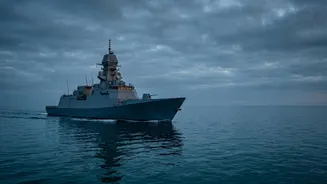
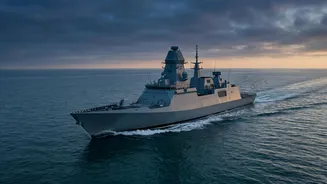
At its heart, the recent Memorandum of Arrangement (MoA) on Maritime Security Cooperation formalises and deepens the existing defence relationship between the Indian Navy and the Japan Maritime Self-Defense Force (JMSDF). Rather than a single new treaty,
it represents an institutional framework to streamline cooperation. Key pillars of this agreement include enhancing Maritime Domain Awareness (MDA) through greater information sharing, coordinating on Search and Rescue (SAR) missions, and planning for joint Humanitarian Assistance and Disaster Relief (HADR) operations. It builds upon the 2020 Acquisition and Cross-Servicing Agreement (ACSA), which allows the armed forces of both nations to exchange logistical support like fuel, transport, and supplies during joint exercises. This practical, on-the-ground support is what turns strategic alignment into operational reality.
Protecting Critical Economic Lifelines
For both India and Japan, the security of Sea Lines of Communication (SLOCs) is not an abstract concept—it is an economic necessity. A staggering 80% of global goods trade travels by sea, and both nations are heavily dependent on these routes for energy imports and trade exports. Key maritime chokepoints, such as the Strait of Malacca, are indispensable economic arteries. Any disruption, whether from piracy, terrorism, or interstate conflict, could have immediate and severe consequences for their economies. The agreement seeks to safeguard these vital commercial shipping lanes through reciprocal naval ship visits, joint exercises like the Japan-India Maritime Exercise (JIMEX), and shared access to port and repair facilities. This collaboration helps ensure the uninterrupted flow of commerce that underpins regional prosperity.
A Response to Regional Instability
This deepening maritime partnership is not happening in a vacuum. It is a direct response to growing instability and assertiveness in the Indo-Pacific. While officials often speak in diplomatic terms, the unspoken context is China's increasing military presence and its attempts to unilaterally alter the status quo in areas like the South China Sea and East China Sea. Actions such as using coast guard vessels to interfere with international shipping create uncertainty and challenge the freedom of navigation—a core principle of international maritime law. By partnering, India and Japan are sending a clear signal of their commitment to a rules-based order. This cooperation acts as a form of deterrence, demonstrating a united front against coercive actions and reaffirming that vital international waterways must remain open to all.
Beyond Ships: Industrial and Tech Cooperation
The significance of the MoA extends beyond naval patrols. A crucial and forward-looking element of the enhanced partnership is the focus on defence industrial cooperation. The two nations have agreed to explore joint development and design of naval ships and to leverage India's 'Make in India' initiative for shipbuilding. This involves combining Japan's advanced technological capabilities with India's growing manufacturing and industrial base. The agreement also aims to deepen the research partnership between India's Defence Research and Development Organisation (DRDO) and Japan's Acquisition, Technology & Logistics Agency (ATLA). This collaboration could lead to the transfer of sophisticated defence technology, strengthening India's indigenous defence capabilities for the long term.
A Cornerstone of the Indo-Pacific Strategy
The India-Japan maritime pact is a vital bilateral component of a much larger multilateral vision: the Quadrilateral Security Dialogue, or Quad. Comprising India, Japan, Australia, and the United States, the Quad is committed to ensuring a 'Free and Open Indo-Pacific'. Strong bilateral ties like the one between New Delhi and Tokyo are the building blocks that give the Quad its substance. The logistics agreement (ACSA), for instance, not only helps the Indian and Japanese navies work together but also enhances their interoperability with other partners like Australia and the US, with whom they also have similar pacts. By strengthening their own partnership, India and Japan are contributing to a more resilient security architecture for the entire region, ensuring a balance of power and promoting stability.