






Blockbuster Salaries as a Baseline
From his early days, Tom Cruise’s paychecks have mirrored his ascent to superstardom. After earning $75,000 for his breakout role in 1983's Risky Business, his salary quickly climbed. Just three years later, he commanded $2 million for the original Top
Gun. Throughout the 90s and 2000s, he became one of the first actors to consistently command $20 million or more per film, a salary reserved for only the most bankable stars. This high baseline provided the foundation for his wealth, but it's his other income streams that truly set him apart. His upfront fees are just the beginning of the story; the real magic lies in how he structures his contracts.
The Art of the 'First-Dollar Gross' Deal
The secret to Cruise's massive earnings isn't his salary; it's his pioneering use of “first-dollar gross” deals. Unlike typical back-end deals where an actor gets a percentage of the profits after the studio recoups its costs, a first-dollar gross arrangement means Cruise gets a cut of the revenue from the very first ticket sold. This is an incredibly rare and powerful position. For Top Gun: Maverick, he took a relatively modest $13 million upfront salary in exchange for a significant percentage of the gross. As the film soared past $1.4 billion worldwide, that deal netted him an estimated $100 million, one of the biggest paydays in movie history.
The Mission: Impossible Cash Machine
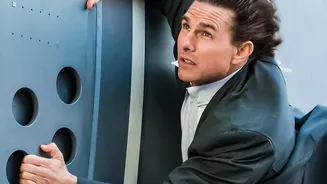
No single franchise has been more lucrative for Cruise than Mission: Impossible. As both the star and a producer, he has leveraged his control to maximize his earnings. For the very first film in 1996, his combined role earned him a reported $70 million. For subsequent sequels like Mission: Impossible II and III, he walked away with around $75 million for each, thanks to deals giving him up to 30% of the profits. While his upfront salary for recent installments like Dead Reckoning Part One was a lower $12-14 million, his back-end participation is where the real money is made, with his total earnings from the seven-film franchise estimated to be over $400 million.
Producer Power and Real Estate
Beyond his on-screen roles, Cruise co-founded the production company Cruise/Wagner Productions in 1993, giving him even greater control and a larger share of the financial pie for the films he produced. This move was ahead of its time, cementing his status not just as an actor but as a powerful businessman. In addition to his film empire, Cruise has a significant real estate portfolio. Over the years, he has owned a variety of lavish properties, from a ranch in Telluride, Colorado, which he sold for nearly $40 million in 2021, to a multi-residence compound in Hollywood Hills and a massive two-level penthouse in Clearwater, Florida. These quiet, strategic investments in property have further solidified his financial standing away from the box office.