






A Comeback Years in the Making
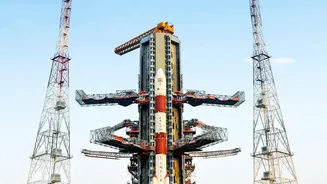
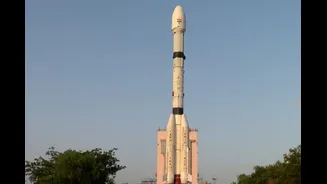
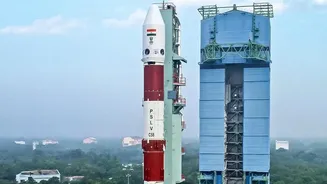
In the pre-dawn hours of September 4, 2026, ISRO's Geosynchronous Satellite Launch Vehicle (GSLV-F17) thundered into the sky from Sriharikota, carrying with it not just a satellite, but the weight of expectation. This launch marks a significant moment
of redemption, coming after the painful failure of the GSLV-F10 mission in August 2021. That mission, which was carrying the EOS-03 satellite, was aborted mid-flight due to an anomaly in its cryogenic upper stage. A failure analysis later pointed to a pressure leak in a critical valve, an issue that sent engineers back to the drawing board to ensure history would not repeat itself. The successful flight of GSLV-F17, which precisely placed its payload into the intended orbit, is a testament to the meticulous corrective work done by ISRO and a much-needed morale boost for India's space ambitions.
Meet EOS-05: India’s New Eye in the Sky
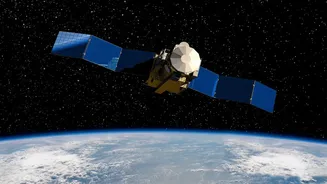
The precious cargo aboard the GSLV-F17 was the EOS-05, a state-of-the-art Earth observation satellite. Weighing approximately 2,367 kg, it is the heaviest satellite ever launched by a GSLV into a geosynchronous transfer orbit. But its weight is not what makes it special. EOS-05 is India's first-ever imaging satellite designed to operate from a geosynchronous orbit, some 36,000 kilometres above the Earth. Unlike satellites in low-Earth orbit that pass over a location periodically, a satellite in geosynchronous orbit moves in sync with the Earth's rotation. This allows EOS-05 to maintain a constant watch over the Indian subcontinent and surrounding oceans, providing near real-time imagery of a large area. This capability is a game-changer for the nation.
A Tool for Safety and Security
The applications for EOS-05 are vast and vital. Its primary objective is to provide rapid monitoring of natural disasters. The satellite can capture images of a specific region of interest every five minutes, tracking the rapid evolution of cyclones, floods, forest fires, and other episodic events. This near-continuous stream of data can drastically cut down emergency response times, helping to save lives and property. Beyond disaster management, EOS-05 will play a crucial role in agriculture by monitoring crop health, soil moisture, and land-use changes. Furthermore, the satellite has significant strategic implications. Its ability to provide a constant watch over India’s land and maritime borders enhances the country's surveillance capabilities and national security posture.
Why the GSLV’s Success Is So Critical
The successful return of the GSLV, once nicknamed the 'naughty boy' of ISRO for its inconsistent early track record, is arguably as important as the satellite it carried. The GSLV is India's key to achieving self-reliance in launching heavier satellites, which are crucial for communications, navigation, and advanced scientific missions. While ISRO's Polar Satellite Launch Vehicle (PSLV) is a reliable workhorse for lighter payloads, the GSLV and its powerful cryogenic upper stage are necessary for placing hefty satellites into high-altitude orbits. This successful launch reinforces confidence in the GSLV-MkII's reliability, which is essential for future missions, including those supporting the NavIC constellation and other strategic assets. It proves that the lessons from the 2021 failure have been learned and applied, strengthening India's position as a formidable space power.