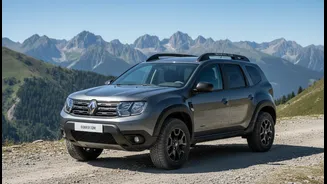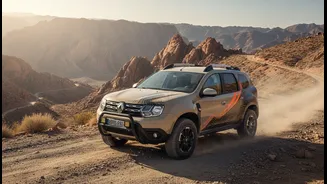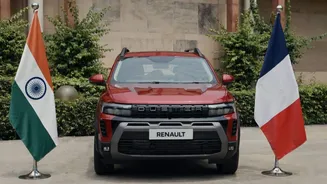






Meet the Newest Kiger
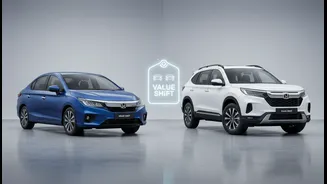
Renault has expanded its Kiger lineup by introducing four new variants, including a notable 'Evolution+' trim. This isn't a ground-up redesign or a comprehensive facelift. Instead, it’s a strategic variant rejig aimed at making certain premium features
more accessible and offering more choice to potential buyers in the fiercely competitive sub-4 metre SUV segment. The updates include features like a push start/stop button, smart access card, wireless smartphone connectivity, and auto AC being made available on a wider range of trims. Externally, the car remains largely the same, preserving the Kiger’s established muscular profile. The core idea is to shuffle the feature deck to create fresh price points and perceived value.
Under the Hood: Business as Usual
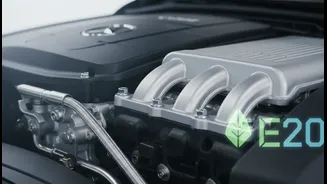
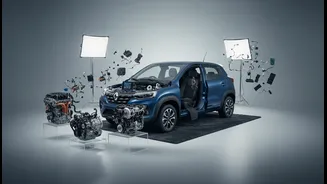
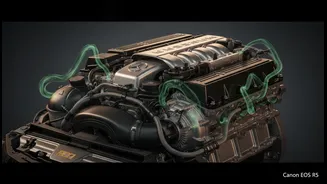
The headline's claim of no 'mechanical reinvention' holds true. The new Kiger variants carry over the exact same engine and transmission options. Buyers can still choose between the 1.0-litre naturally aspirated petrol engine (72 PS power, 96 Nm torque) and the more spirited 1.0-litre turbocharged petrol engine (100 PS power, 160 Nm torque). These engines are paired with the same 5-speed manual, AMT, and CVT gearbox options as before. The chassis, suspension, ground clearance, and fundamental driving dynamics remain untouched. This is not a performance upgrade; it is an exercise in feature distribution and marketing positioning. The car drives exactly as it did before, with the changes being focused entirely on the user-experience inside the cabin and the accessibility of certain features.
The Power of a Good Story
This is where 'storytelling' comes into play. By launching these variants, Renault is crafting a new narrative for a familiar product. The story is one of accessibility and premiumisation. The company can now market the Kiger as the 'most accessible turbo SUV' or highlight that 'premium features are now more affordable'. This strategy targets specific buyer psychologies. Some customers prioritise certain creature comforts like keyless entry or a better infotainment screen but are not willing to stretch their budget for the highest-end model. These new variants create a custom-fit solution for them. It's a story that says, 'we heard you, and now you can get the features you want without paying for things you don’t.' This kind of targeted marketing is often more effective than a minor, unnoticeable change in horsepower.
A Well-Worn Path in the Indian Market
Renault is not inventing a new strategy here; it is masterfully executing a classic one. The Indian auto market is defined by intense competition and price-sensitive consumers. Full model changes are incredibly expensive and time-consuming. Special editions, sticker jobs, and feature reshuffles are a cost-effective way to keep a model in the news, clear inventory, and fend off newer rivals. Companies like Tata Motors with its 'Dark' and 'Camo' editions, and Hyundai with its frequent special editions for the Creta, have used this playbook to great success. It generates buzz and creates a sense of novelty, which can be enough to sway a buyer who is on the fence. It's a survival tactic that keeps sales momentum going between major product lifecycles.
What It Means for Renault and You
For Renault, this is a smart, low-risk move. It keeps the Kiger relevant and competitive against rivals from Maruti Suzuki, Hyundai, and Tata without requiring massive capital investment. It allows the brand to respond dynamically to market demands and maintain a strong value-for-money proposition. For the customer, the verdict is more nuanced. If you were already considering a Kiger, these new options might provide a variant that perfectly fits your budget and feature wish list. However, if you were waiting for a significant upgrade in performance, safety, or design, this launch isn't it. It's a reminder for buyers to look past the marketing narrative and understand exactly what they are paying for: a proven product with a different combination of features, not a fundamentally new car.