




Why the Observatory Is Your First Stop
Venturing to an active volcano isn't like a typical holiday. These are dynamic, powerful forces of nature. While travel companies and tour guides offer valuable services, your primary source for safety information should always be the official volcano observatory
responsible for that region. These scientific institutions, like the U.S. Geological Survey (USGS) in the United States or Italy's National Institute of Geophysics and Volcanology (INGV), are tasked with monitoring volcanic activity 24/7. Their mission is to detect the earliest signs of unrest, assess hazards, and provide timely warnings to protect the public. By starting your planning here, you are basing your decisions on the most reliable, unbiased, and up-to-date scientific data available, straight from the experts watching the volcano's every move.
Decoding the Data: What to Look For
Observatory websites can seem technical, but they are designed to communicate crucial information clearly. The most important feature for a visitor is the Volcano Alert Level. In the U.S., this is a four-tiered system: Normal (Green), Advisory (Yellow), Watch (Orange), and Warning (Red). These levels are designed to inform people on the ground about the volcano's status. 'Normal' indicates a typical, non-eruptive state, while 'Warning' means a hazardous eruption is imminent or underway. Beyond the alert level, look for updates on seismic activity (earthquakes), ground deformation (swelling or sinking of the land), and gas emissions, particularly sulfur dioxide. Many observatories also provide live webcams and daily or weekly written updates that give a plain-language summary of the volcano's current behaviour.
From Alerts to Action: A Tale of Two Volcanoes
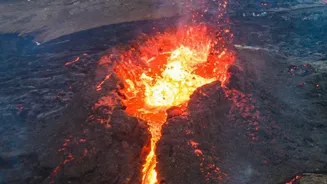
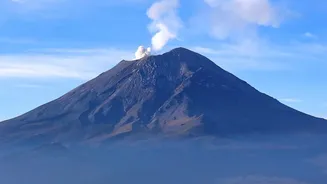
Consider how this works in practice. For volcanoes in Hawaii like Kīlauea, the Hawaiian Volcano Observatory (HVO) provides daily updates, maps of lava flows, and specific information on air quality related to volcanic smog (vog). An 'Advisory' level might mean you can view lava from a safe distance, but a 'Warning' could trigger area closures. Similarly, for Italy's Mount Etna or Stromboli, the INGV's Catania Observatory issues bulletins that local authorities use to decide whether hikers can access summit trails. Currently, Stromboli is at a 'Yellow' alert level, indicating a state of elevated monitoring. Understanding this information allows you to know which areas are safe, what phenomena you might witness, and when to change your plans. It transforms you from a simple tourist into an informed and responsible visitor.
Beyond the Observatory: Completing Your Plan
Checking the observatory is your first step, not your last. Once you have a clear picture of the volcano's status, you can move on to other practicalities. Use the official information to vet tour operators—a reputable guide will never offer to take you into an area that an observatory has deemed unsafe or closed. Your packing list should also be influenced by this data. If gas emissions are elevated, people with respiratory issues should take extra precautions. Always pack layers of clothing, sturdy closed-toe shoes, water, a flashlight, and a first-aid kit. Remember that even in a 'Normal' state, volcanoes present inherent risks like unstable ground and sudden weather changes. Always follow the guidance of park rangers and local authorities on-site, and never cross safety barriers or enter restricted zones.