






What Is This New AI Traffic System?
The project is called the Intelligent Traffic Management System (ITMS). At a cost of nearly ₹1,790 crore, it aims to give Delhi's traffic management a much-needed 'brain'. Instead of the current system where most traffic signals run on fixed timers, the ITMS will
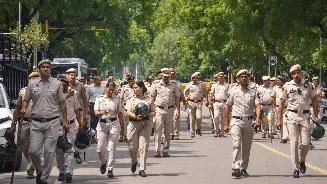
use artificial intelligence to manage traffic in real-time. Implemented by the Delhi Police, this network will use AI-enabled cameras and sensors to monitor traffic density and flow. The technical expertise and project management will be handled by the Centre for Development of Advanced Computing (C-DAC), a premier R&D organization of the Indian government.
How Will It Prioritise Ambulances?
This is the most critical, life-saving feature of the ITMS. The system is designed to create 'green corridors' for emergency vehicles automatically. Ambulances will be fitted with special sensors. As an ambulance approaches a traffic junction, these sensors will communicate with the traffic signal ahead. The ITMS will then detect the approaching emergency vehicle and automatically turn the signal green, holding it until the ambulance has safely passed through the intersection. This process will repeat at each signal on the ambulance's route, creating a clear path through traffic and drastically cutting down travel time to hospitals during the critical 'golden hour'.
More Than Just Green Corridors
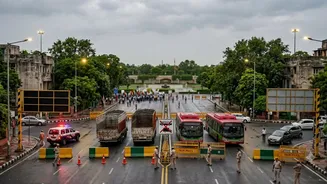
While prioritising ambulances is a headline feature, the ITMS is designed to improve the daily commute for everyone. Its core function is the Adaptive Traffic Control System (ATCS), which will be installed at over 1,000 locations across the city. This system will analyse live traffic data to dynamically adjust signal timings, reducing unnecessary stops and easing congestion along 42 major corridors. For commuters, this means smoother traffic flow and more predictable travel times. The system will also provide real-time updates on traffic conditions, diversions, and parking availability through digital signboards and mobile platforms.
Smarter Enforcement and Road Safety
The ITMS will also usher in an era of technology-based traffic enforcement. The network of AI-powered cameras will automatically detect a range of common violations, including red-light jumping, speeding, driving on the wrong side of the road, and not wearing helmets or seatbelts. The system's AI analytics will also help police identify stolen vehicles, track repeat offenders, and investigate hit-and-run incidents, contributing to overall road safety and better law enforcement. This automated and integrated approach is expected to bring more discipline to Delhi's roads, which currently have over 71 lakh registered vehicles.
When Will This System Be Active?
The project is slated for a phased rollout over 24 months. The implementation will be done corridor by corridor, with the first phase set to be completed within 12 months. This initial phase will cover five key corridors, with the installation of 250 adaptive signal junctions and 271 enforcement points. The entire project, covering 42 corridors, will be implemented by a Master System Integrator chosen through competitive bidding, with C-DAC overseeing the technical aspects to ensure everything works as planned. After the two-year implementation, there will be a five-year period of operation and maintenance to ensure the system runs smoothly.