
An Emblem of Bengaliness
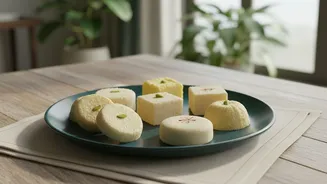
In Bengal, no celebration is complete without mishti, or sweets, and sandesh holds a place of honour. Made from fresh chhena (cottage cheese) and sugar, this confection is more than just a dessert; it’s an integral part of festivals, family gatherings,
and religious ceremonies. The name itself, which translates to “message,” reflects its traditional role as a bearer of good news. While its melt-in-the-mouth texture is legendary, what truly sets sandesh apart is its visual language. Long before the era of modern cake decorating, Bengali artisans were using carved moulds to give this sweet a distinct identity, turning each piece into a miniature sculpture that tells a story of heritage and hospitality.
The Art of the 'Chhaanch'
The magic behind these designs lies in the 'chhaanch', the Bengali word for a mould. Historically, these were crafted at home by women using worn-out stone plates or leftover wood. They would painstakingly chisel intricate patterns in reverse, similar to a stamp. As sweet shops grew in popularity during the 19th century, a dedicated cottage industry emerged, particularly in Kolkata. Artisans began using durable woods like teak and mahogany, and potters created moulds from local clay. These materials—stone, wood, and terracotta—each lend a unique character to the finished product. Before use, wooden moulds are often soaked in oil and dried, giving them a smooth, dark finish that prevents the delicate chhena from sticking.
A Language of Symbols
The motifs carved into sandesh moulds are deeply symbolic, drawing from nature and religious iconography. The 'shankh' (conch shell) is one of the most common designs, representing auspiciousness and purity in Hindu rituals. Similarly, the fish motif, a staple of Bengali life and diet, signifies prosperity and good fortune. Floral patterns, especially the lotus, are carved to represent beauty and divinity. For special occasions, moulds were even carved with messages like 'Shukhey thaako' (Live Well) or 'Aashirbaad' (Be Blessed), turning the sweet into an edible greeting card. Each design connects the sandesh to a specific occasion, from weddings to harvest festivals, embedding it deeply within the cultural fabric.
From Humble Homes to Grand Innovations
The tradition of using chhena for sweets is itself an innovation, born from the influence of Portuguese cheese-making techniques in the 17th and 18th centuries. Before this, curdling milk was often considered inauspicious. The Bengali Renaissance in the 19th century saw confectioners like Bhim Chandra Nag and K.C. Das elevate sandesh to an art form, creating hundreds of varieties. This era brought not just new flavours but also incredible creativity in form. One of the most famous innovations is the 'Jolbhora' sandesh, created by Surya Kumar Modak, which features a liquid heart of date palm jaggery or rose syrup. This tradition of innovation continues today, with modern sweet makers experimenting with everything from chocolate-infused sandesh to novel geometric shapes, though often still using traditional moulding techniques.
Preserving a Sweet Legacy
Today, the art of making traditional wooden and terracotta moulds is facing challenges. Many confectioners are shifting to cheaper and more durable metal, silicone, or plastic moulds for mass production. However, for connoisseurs and traditionalists, the charm of a hand-pressed sandesh from a wooden 'chhaanch' remains unmatched. The subtle imperfections and the depth of the impression tell a story of craftsmanship passed down through generations. These moulds are not just tools; they are heirlooms that carry the memory and identity of Bengal's culinary heritage. They ensure that every bite of sandesh is an experience that delights the eyes as much as it does the palate.