


Cosmic Detective Work
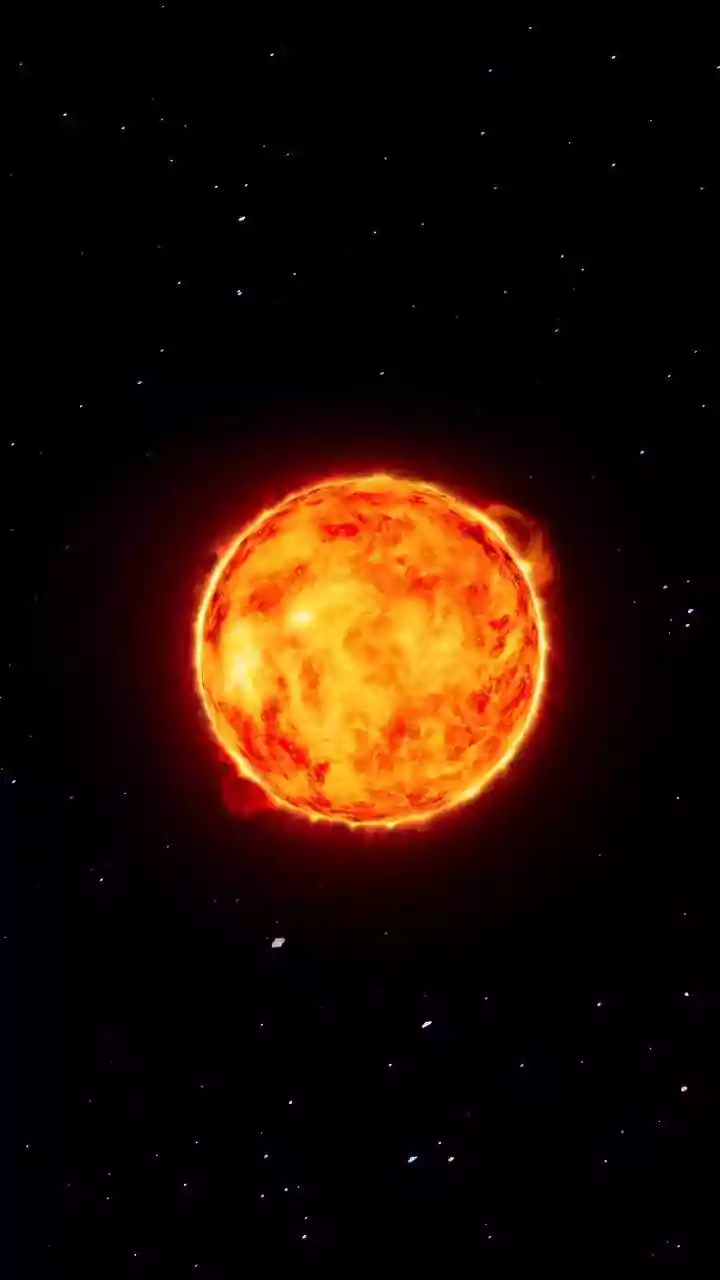
For decades, scientists have been puzzled by a few strange things about our Sun. Standard models that predict how stars evolve can't quite explain some of its specific features. One major mystery is the Sun's surprisingly low amount of lithium, an element
that should have been more abundant based on the cloud of gas and dust from which it formed. Additionally, there are subtle discrepancies between the predicted and observed speed of sound waves traveling through the Sun's interior, a field of study known as helioseismology. A team of researchers, led by Professor Mutlu Yildiz of Ege University in Turkey, wondered if these puzzles could have a single, dramatic origin.
A Tale of a Voracious Young Sun
The team's new theory, published in the Monthly Notices of the Royal Astronomical Society, proposes that the Sun was a cosmic cannibal in its youth. Their computer models suggest that a rocky planet several times the mass of Earth—a "super-Earth"—may have formed in the early solar system and spiraled inward, eventually being engulfed by the young star. Such an event could neatly solve the existing puzzles. A large, rocky planet would be chemically different from the Sun, and swallowing it would alter the star's composition. The models that best fit the Sun's current state are those where it ingested a planet between five and ten times the mass of Earth. This could explain the missing lithium and the structural quirks inside the Sun. It would also explain why our solar system lacks a super-Earth, a type of planet that is very common in other star systems astronomers have studied.
The Key Qualification to Keep in Mind
This is where the crucial caveat comes in. The idea of the Sun eating a planet is a powerful explanation, but it is not yet proven fact. The research is based on sophisticated computer modeling, which shows that planetary engulfment is a plausible explanation for the Sun's oddities. However, it's not the only possible explanation. As the researchers themselves are careful to note, other processes could also account for the lithium depletion and structural differences. The theory provides a compelling narrative that fits the available data, but it remains a hypothesis. Think of it as a very well-supported theory that needs more evidence before it can be confirmed.
The Search for Hard Evidence
So, what's next? Scientists can't go back in time to witness this cosmic collision. Instead, they must look for lingering fingerprints inside the Sun today. The study predicts that such an event would leave specific structural and chemical signatures deep beneath the Sun's turbulent surface. The most promising way to find this evidence is through helioseismology, by making more precise measurements of the sound waves that ripple through the star. If future observations can detect the exact structural changes predicted by the planet-ingestion model, it would provide strong, independent confirmation. Until then, the case of the Sun's missing super-Earth remains an open investigation, a fascinating glimpse into the chaotic and often violent history of how planetary systems like our own come to be.