





The Pioneer and the Prompt
Ash Koosha is no stranger to the cutting edge. The Iranian-British musician and multimedia artist has spent his career pushing boundaries, from performing via virtual reality to incorporating artificial intelligence into his albums. Now, he's at the forefront
of one of cinema's most contentious new movements: fully AI-generated feature films. Koosha's production company, Fountain 0, recently made headlines when its first film, 'Dreams of Violets,' premiered at the Tribeca Film Festival. The 75-minute docudrama, which dramatizes the 2026 anti-government protests in Iran, was created entirely with AI tools, turning eyewitness accounts and video footage into a narrative feature in a matter of months for under $2,000. This lightning-fast production, tackling a subject impossible to film traditionally due to safety concerns, showcases Koosha’s core thesis: AI is not just a gimmick, but a tool to tell impossible stories.
An Odyssey of a Different Kind
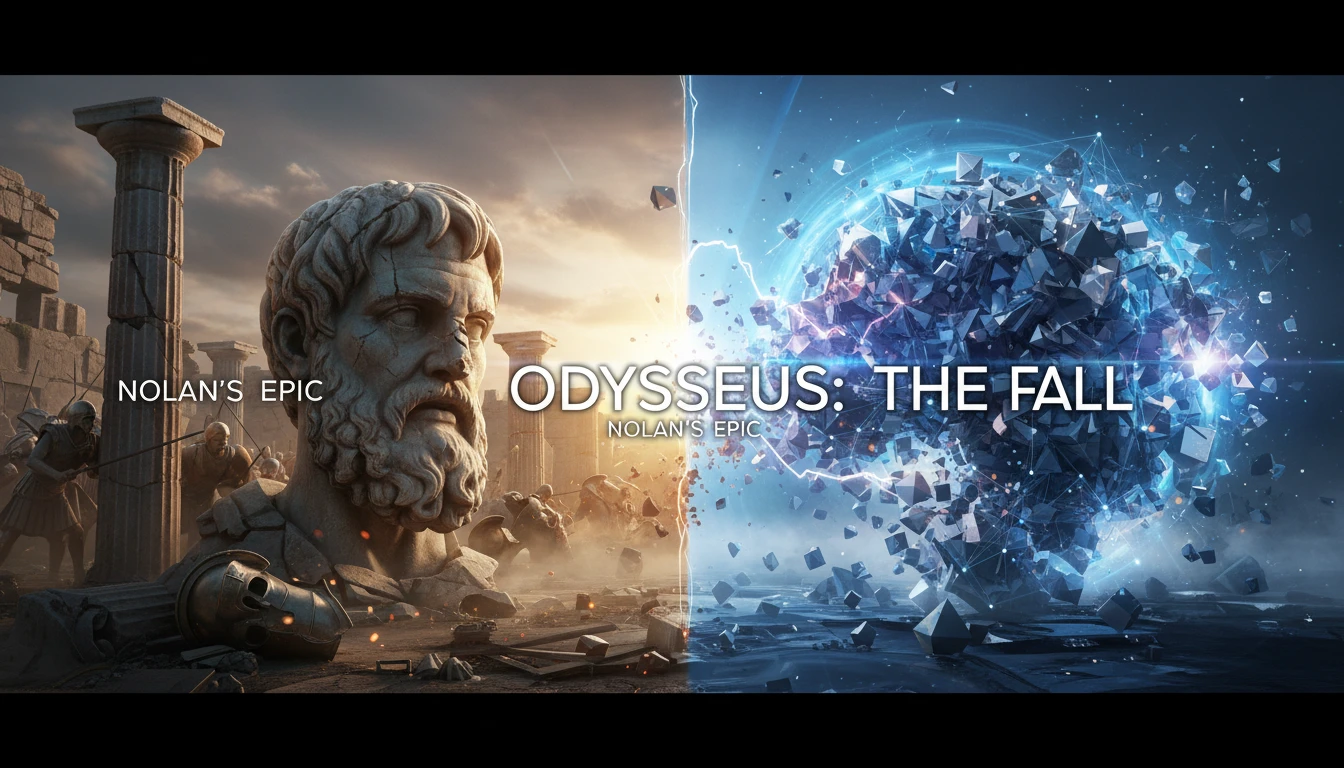
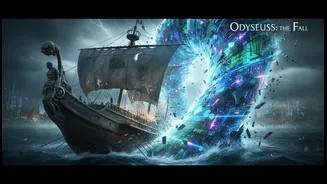
Hot on the heels of 'Dreams of Violets,' Koosha announced his next project, 'Odysseus: The Fall,' a 135-minute retelling of Homer’s epic. The film’s late-summer release is strategically, and provocatively, timed to coincide with Christopher Nolan's own blockbuster, 'The Odyssey.' Koosha isn't just picking a fight; he's making a point. His film, made part-time over three months on a minuscule budget, stands in stark contrast to Nolan's $250 million spectacle. In a statement, Koosha said he hopes Nolan's film is a raging success, and that his own AI version might attract viewers “curious to see the ultimate in human creation and compare it to one man's collaboration with AI.” This is Koosha’s gamble: that the very audience that appreciates the monumental craft and technical ambition of a Nolan film might also be the most receptive to the new, mind-bending possibilities of AI-driven spectacle.
The Nolan Analogy
The comparison seems bold, even audacious. Nolan is famous for his dedication to practical effects, film stock, and in-camera wizardry, while Koosha operates entirely in the digital realm. Yet, Koosha sees a shared spirit. He argues that just as Nolan pushes the boundaries of what's possible with IMAX cameras and massive budgets, AI allows independent creators to achieve a similar sense of scale and vision without the financial gatekeeping of the traditional studio system. For Koosha, AI can democratize the 'impossible movie.' It enables a new generation of filmmakers, whom he compares to iconoclasts like Alejandro Jodorowsky, to bring their grandest visions to the screen. He predicts that in the future, underwriting a $300 million movie will no longer make sense when similar spectacle can be achieved by small, agile teams.
Art Without a Soul?
The pushback against AI in filmmaking has been fierce. Critics, and even other filmmakers, use terms like 'slop' to describe AI-generated content, arguing it lacks human intention, emotion, and authorship. Recent polls show that while audiences are accepting of AI for background tasks like visual effects, a majority are reluctant to engage with content they know is primarily created by AI, citing concerns about authenticity and quality. Koosha himself is surprisingly critical of the current state of AI art, admitting that most of it disgusts him and gives him a headache. He distinguishes his work by stressing the human element. For both 'Dreams of Violets' and 'Odysseus,' the scripts were written by him, the creative decisions were his, and he even provided voice work. He insists his films are not “AI films” but simply “films,” where AI is a tool, not the author. The goal, he says, is not to replace human creativity but to augment it, to be an artist using a new and powerful paintbrush.
The Next Cinematic Frontier
Whether Koosha's gambit pays off remains to be seen. The initial reactions to the teaser for 'Odysseus: The Fall' have been skeptical, with many pointing out the uncanny, weightless look that still plagues much AI video. Even Nolan himself has noted that young people in particular seem to be rejecting what they call “AI slop.” But Koosha is undeterred, viewing every criticism as a learning opportunity. He believes we are at the very beginning of a new cinematic language. It took decades for digital cameras to gain acceptance, and he sees AI following a similar path. The question is not whether AI will change filmmaking, but who will guide that change. Koosha is positioning himself as a voice of reason, an artist attempting to use a revolutionary technology not for crass replacement, but for creative expansion. By drawing a line from the grand ambition of Christopher Nolan to his own desktop epics, he is asking us to see not the end of cinema, but a strange and exciting new beginning.