






A Brain for Delhi's Gridlock
Delhi is preparing for a major technological leap in its battle against traffic congestion. The Union Cabinet has approved a ₹1,789.52 crore project for an Intelligent Traffic Management System (ITMS) for the capital. This system is designed to act as a 'brain'
for the city's traffic, shifting from outdated fixed-time signals to a dynamic, responsive network that analyses real-time road conditions. With over 71 lakh active vehicles on its roads, Delhi's infrastructure is under immense strain. The ITMS aims to optimise the existing road network, making travel smoother, safer, and more efficient for everyone. The entire project will be implemented by the Delhi Police, with technical support from the Centre for Development of Advanced Computing (C-DAC).
How the Green Corridor Works
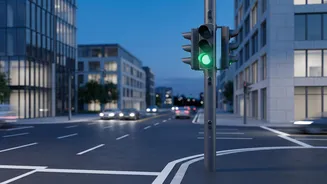
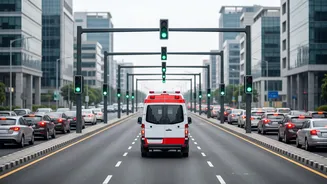
The most critical feature of the new ITMS is its ability to create 'green corridors' for ambulances and other emergency vehicles. This life-saving function will be enabled by fitting emergency vehicles with special sensors. As an ambulance approaches a traffic junction, these sensors will communicate with the AI-powered signals. The system will detect the vehicle from a distance—potentially 200 to 500 meters away—and automatically turn the signal green. This process will repeat at subsequent intersections, effectively clearing a path through heavy traffic and allowing the ambulance to pass with minimal delay. This ensures that the critical 'golden hour' for medical emergencies is not lost in gridlock.
Phased Rollout Across the Capital
The implementation of this ambitious project will not happen overnight. The Delhi Police will roll out the ITMS in three phases over a 24-month period across 42 identified high-traffic corridors. The first phase, to be completed within 12 months, will cover five corridors, upgrading 250 junctions with adaptive signals. The second phase will add another seven corridors within 18 months. This phased approach allows for rigorous testing and evaluation at each stage, ensuring that any issues with the technology are resolved before expanding further. Following the two-year implementation, the system will be operated and maintained for five years to ensure its long-term effectiveness.
More Than Just Green Lights
While giving priority to ambulances is a headline feature, the ITMS is a comprehensive overhaul of traffic management. The system's AI will also enable automated enforcement of traffic rules. Cameras will be able to detect a wide range of violations, including red-light jumping, speeding, driving without a helmet or seatbelt, and using a mobile phone while driving. The AI analytics will also help identify stolen or blacklisted vehicles and track repeat offenders. For daily commuters, the system will provide real-time information on congestion, diversions, and even parking availability through variable message signs and digital platforms, which may be shared with navigation apps. This will empower drivers to make smarter route choices, reducing travel time and frustration.