




A Location on the Ring of Fire
To understand Japan's seismic reality, one must first look at its location on the Pacific Ring of Fire. This horseshoe-shaped belt stretches for 40,000 kilometres around the Pacific Ocean and is home to 90% of the world's earthquakes and over 75% of its active
volcanoes. The Ring of Fire isn't a single entity but a vast network of tectonic plate boundaries. These massive slabs of Earth's crust are in constant, slow-motion collision. Japan happens to be situated in one of its most complex and active intersections, making it a global hotspot for geological drama.
The Four Tectonic Players
The ground beneath Japan is a battlefield for four major tectonic plates. To the east, the huge Pacific Plate moves westwards. To the south, the smaller Philippine Sea Plate pushes northwards. The nation of Japan itself rests primarily on sections of two continental plates: the Eurasian Plate in the southwest and the North American Plate (or its smaller microplate, the Okhotsk Plate) in the northeast. This complex arrangement means the country is being squeezed and stressed from multiple directions at once, creating an environment ripe for seismic energy release.
The Engine of Earthquakes: Subduction
The primary cause of Japan's frequent and powerful earthquakes is a process called subduction. Both the Pacific and Philippine Sea plates are oceanic plates, which are denser than the continental plates they are crashing into. As a result, they are forced to dive, or subduct, beneath Japan. The Pacific Plate grinds its way under the North American/Okhotsk Plate at a rate of about 8 to 9 centimetres per year. This process is anything but smooth. The plates lock together, building up immense stress over decades or centuries. When the stress finally overcomes the friction, the plates lurch forward in a sudden, violent release of energy, which we feel as an earthquake.
More Than Just Shaking
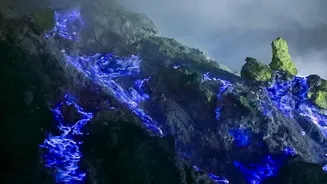
This intense tectonic activity doesn't just produce earthquakes. The same subduction process that generates tremors also fuels Japan's numerous active volcanoes. As the oceanic plates sink deep into the Earth's mantle, they melt, creating magma that rises to the surface. Furthermore, when a massive earthquake occurs offshore, it can abruptly lift or drop huge sections of the seafloor. This displacement of water can generate devastating tsunamis, like the one that followed the massive Tōhoku earthquake in 2011. The constant threat has made Japan a world leader in disaster preparedness, with some of the strictest building codes and most advanced early warning systems on the planet.