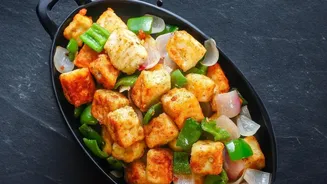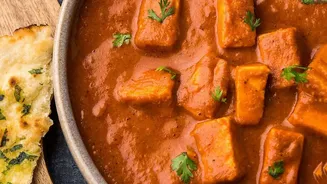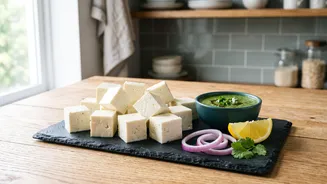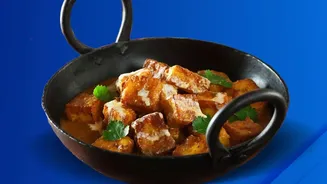








What is Analogue Paneer?
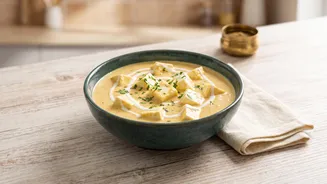
Analogue paneer is a product designed to look and feel like real paneer but is not made from pure milk. Instead of curdling fresh milk, manufacturers often use a combination of cheaper ingredients like vegetable oils (frequently palm oil), starch, skimmed
milk powder, and various emulsifiers and stabilizers. While authentic paneer is a natural source of protein and healthy fats derived from milk, its analogue counterpart is often lower in protein and may contain unhealthy trans fats. The final product can mimic the texture and appearance of real paneer so closely that it's hard for consumers to tell the difference by sight alone. This is not considered 'adulterated' paneer, which involves secretly adding substances to real paneer; an analogue product is formulated from different ingredients entirely. The problem arises when it is sold and marketed as genuine paneer, misleading the customer.
The Health and Quality Concerns
The primary issue with analogue paneer is deception, but significant health concerns also exist. Because it's made with vegetable oils and starch instead of milk fat and protein, it lacks the nutritional benefits of real paneer, such as high-quality protein and calcium. More alarmingly, the ingredients used can sometimes be harmful. Unregulated production may involve non-food-grade chemicals, detergents, and synthetic additives to achieve the right texture and whiteness. Regular consumption of such products can lead to digestive issues, hormonal disruption, and stress on the liver and kidneys. Investigations have found that a significant percentage of paneer samples tested in various regions failed quality standards, with many deemed unsafe for consumption due to harmful chemicals.
FSSAI’s Proposed New Rules
To address this issue, the Food Safety and Standards Authority of India (FSSAI) issued a draft notification on September 24, 2026. The key proposal is to amend the Food Safety and Standards (Prohibition and Restrictions on Sales) Regulations, 2011. The draft seeks to prohibit the sale of any product as "paneer" if it is made from constituents not derived from milk. This means that manufacturers of analogue paneer would be barred from using the word 'paneer' in their product's name, labelling, or marketing materials. Any product currently licensed under the 'Analogue in Dairy Context' category would have to be renamed. The stated goal is to prevent consumers from being misled and to ensure that the name of a food product accurately reflects its composition.
What This Means for Consumers and Producers
If enacted, these rules would bring much-needed transparency to the market. For consumers, it means they can be more confident that when they buy a product labelled 'paneer', it is the real, milk-derived product. This empowers them to make informed choices about their food. For honest dairy farmers and paneer producers who use pure milk, this regulation levels the playing field by preventing cheaper, imitation products from unfairly competing under the same name. It protects the integrity of a traditional food product. However, it does not mean an outright ban on analogue products themselves; they can still be manufactured and sold, but they must be accurately labelled as what they are, such as 'imitation' or 'analogue' products, not as paneer.
How You Can Share Your Opinion
The proposal is currently a draft, and FSSAI has opened it for public consultation. This is a crucial part of the regulatory process where stakeholders—including consumers, manufacturers, and public health advocates—can provide feedback. The public has a 60-day window from when the notification was published in the Official Gazette to submit their objections and suggestions. Comments can be sent to the Chief Executive Officer of FSSAI in New Delhi or submitted via email to regulation@fssai.gov.in. This feedback will be considered by the authority before the regulation is finalized, offering a chance for the public to have their say in food safety standards.