






A Rulebook for the New Space Age
First established in 2020 by NASA, the U.S. Department of State, and seven other founding nations, the Artemis Accords are a set of non-binding principles designed to guide civil space exploration. They are not a formal treaty but a political commitment
intended to create a shared understanding for a safe, peaceful, and prosperous future in space. The Accords build upon the foundation of the 1967 Outer Space Treaty but offer more practical guidelines for 21st-century activities. Key principles include committing to peaceful exploration, being transparent about activities, offering emergency assistance to astronauts in distress, sharing scientific data, and preserving historical sites like landing spots on the Moon. One of its most significant provisions affirms that nations can extract and use resources from the Moon and asteroids, a crucial clarification for future commercial and scientific missions.
Turkey's Celestial Ambitions
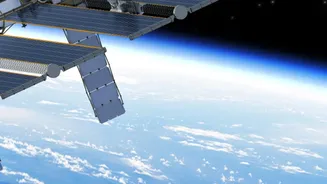
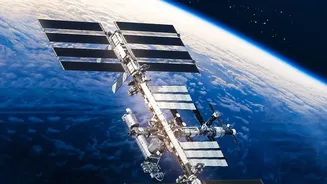
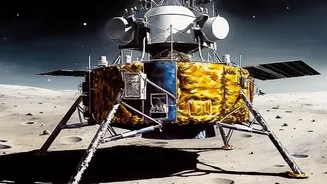
For Turkey, signing the Accords is a logical step in its rapidly advancing National Space Program. Managed by the Turkish Space Agency (TUA), established in 2018, the country has laid out ambitious goals for itself. This commitment has already yielded tangible results. In early 2024, Alper Gezeravcı became the nation's first astronaut to visit the International Space Station, conducting scientific experiments for over two weeks. Another astronaut, Tuva Atasever, completed a suborbital research flight the same year. Looking ahead, Turkey is developing its first lunar mission, AYAP-1, an orbiter planned for 2027 that will culminate in a hard landing on the Moon's surface. By joining the Accords, Turkey gains access to a collaborative framework, opening doors for partnerships in technology, science, and future Artemis missions while aligning its national strategy with a global standard.
A Rapidly Growing Global Coalition
The addition of Turkey as the 71st signatory highlights the remarkable momentum behind the Accords. What began with just eight nations in 2020 has swelled into a broad coalition representing countries from every inhabited continent. Signatories range from established space powers like Japan, Canada, and European nations to emerging space players across the Middle East, Africa, and South America. This rapid expansion demonstrates a widespread desire for clear guidelines as more countries and private companies develop the capacity to operate around the Moon and beyond. The growing number of participants strengthens the Accords' influence, turning its principles into a de facto standard for responsible behavior in space. The signing ceremony, held at NASA headquarters in Washington on August 31, 2026, was attended by top officials from both the U.S. and Turkey, underscoring the diplomatic importance of the event.
The New Geopolitics of Space
The Artemis Accords are more than just a scientific framework; they are a key element of modern space geopolitics. They represent a U.S.-led vision for a cooperative, transparent approach to celestial exploration. This stands in contrast to the International Lunar Research Station (ILRS), a rival Moon base project proposed by China and Russia, which has attracted its own set of partners. As nations choose which framework to join, two distinct blocs are forming, each with different philosophies on governance and cooperation. The growth of the Artemis Accords suggests that many nations favor its emphasis on open partnership and adherence to existing international law. Turkey's decision to join this group, particularly ahead of hosting the prestigious International Astronautical Congress in October 2026, further solidifies the Accords' standing as the leading international agreement for the next era of space exploration.