




The Two Main Cancer Claims
The controversy surrounding talc-based powders involves two distinct types of cancer: mesothelioma and ovarian cancer. The first claim is that some talc was contaminated with asbestos, a known carcinogen. The second, more debated claim is that even asbestos-free
talc, when used for feminine hygiene, is linked to ovarian cancer. These two claims are supported by different types of evidence and are at the heart of the scientific and legal battles.
Where Science Agrees: The Asbestos Problem
There is broad scientific consensus that asbestos is dangerous and causes mesothelioma, a rare and aggressive cancer. Talc and asbestos are minerals that can be found near each other in the earth, creating a risk of cross-contamination during mining. The International Agency for Research on Cancer (IARC), a branch of the World Health Organization, classifies asbestos-contaminated talc as “carcinogenic to humans”. Lawsuits alleging mesothelioma have focused on claims that internal company documents showed J&J knew for decades about trace amounts of asbestos in its talc but did not disclose it. While J&J has consistently denied that its products were contaminated, it has settled the majority of mesothelioma-related lawsuits.
The Ovarian Cancer Debate: Where Studies Differ
The link between perineal (genital) use of talc and ovarian cancer is far more contentious. The evidence here is mixed and has led to conflicting conclusions from different studies. Some research, primarily case-control studies that compare the past talc use of women with ovarian cancer to those without, has found a correlation. These studies suggest a 30-40% increased risk for women who regularly use talc for feminine hygiene. Based on this, the IARC recently upgraded its classification of perineal talc use to “probably carcinogenic to humans” (Group 2A), citing limited evidence in humans but sufficient evidence in animal studies.
Evidence That Challenges the Link
On the other side of the debate are several large-scale studies, including a major 2020 study published in the Journal of the American Medical Association (JAMA), which followed over 250,000 women. These studies, known as cohort studies, tracked participants over time and found no statistically significant association between genital powder use and ovarian cancer risk. Critics of the case-control studies argue they can be prone to recall bias, where participants with a disease may remember past exposures differently than those who are healthy. Proponents of a link argue that cohort studies may not be sensitive enough to detect the risk. This fundamental difference in study design and results is a key reason why the scientific debate continues.
J&J’s Response and the Switch to Cornstarch
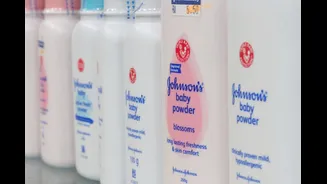
Maintaining that its talc is safe and asbestos-free, Johnson & Johnson has nevertheless made significant business changes. The company stopped selling talc-based baby powder in the U.S. and Canada in 2020, citing declining demand due to what it called “misinformation.” In 2023, it discontinued the product globally, switching entirely to cornstarch-based formulations, including for the Indian market. On the legal front, after multiple failed attempts to resolve the tens of thousands of lawsuits through bankruptcy proceedings, J&J in July 2026 proposed a multi-billion dollar settlement to resolve the vast majority of the outstanding ovarian cancer claims.