



A Celestial Lineup of Six Galaxies
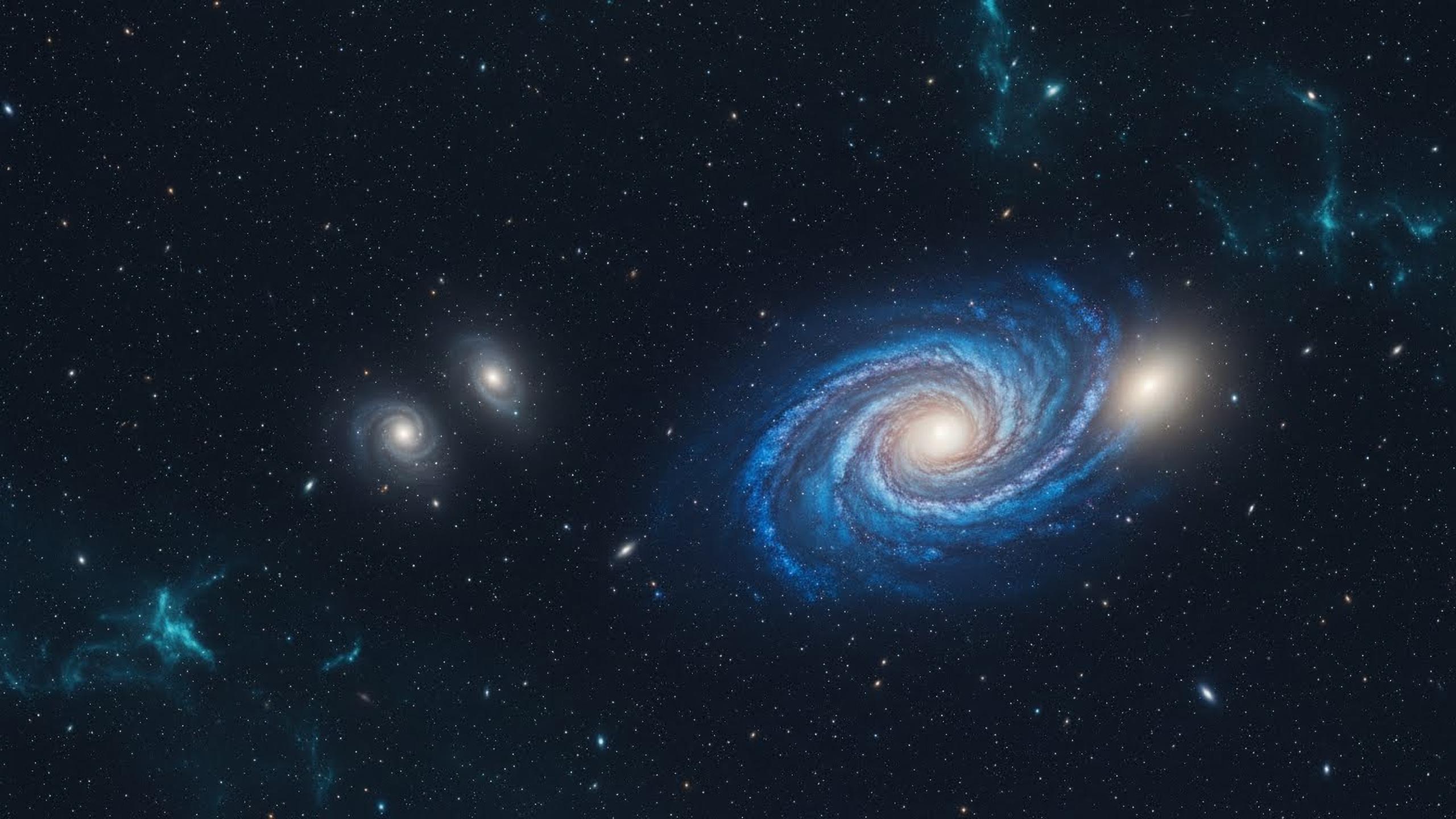
The image in question, featured as NASA's Astronomy Picture of the Day for August 10, 2026, presents not one, but three distinct pairs of galaxies. At first glance, it looks like a gallery of galactic duos, each seemingly locked in a gravitational dance.
The frame captures a total of six galaxies, all members of the vast Centaurus Galaxy Cluster, arranged by chance into these photogenic pairings. However, as astronomers explain, this cosmic photo album is a brilliant lesson in perspective, demonstrating that what we see as side-by-side companions can be a trick of the light, with galaxies separated by immense distances along our line of sight.
The Universe's Trick of Perspective
The concept at play is known as a "chance alignment" or a "line-of-sight coincidence." It’s an optical illusion on a cosmic scale. Imagine holding your thumb up to the sky so it appears to be touching the peak of a distant mountain. You know your thumb and the mountain are not actually touching; they are just aligned from your specific viewpoint. The same thing happens with galaxies. The night sky is a two-dimensional projection of a three-dimensional universe. Two galaxies might appear to be neighbours, but one could be millions of light-years farther away than the other. This image of three pairs provides a perfect side-by-side comparison of different cosmic relationships.
A Tale of Three Pairs
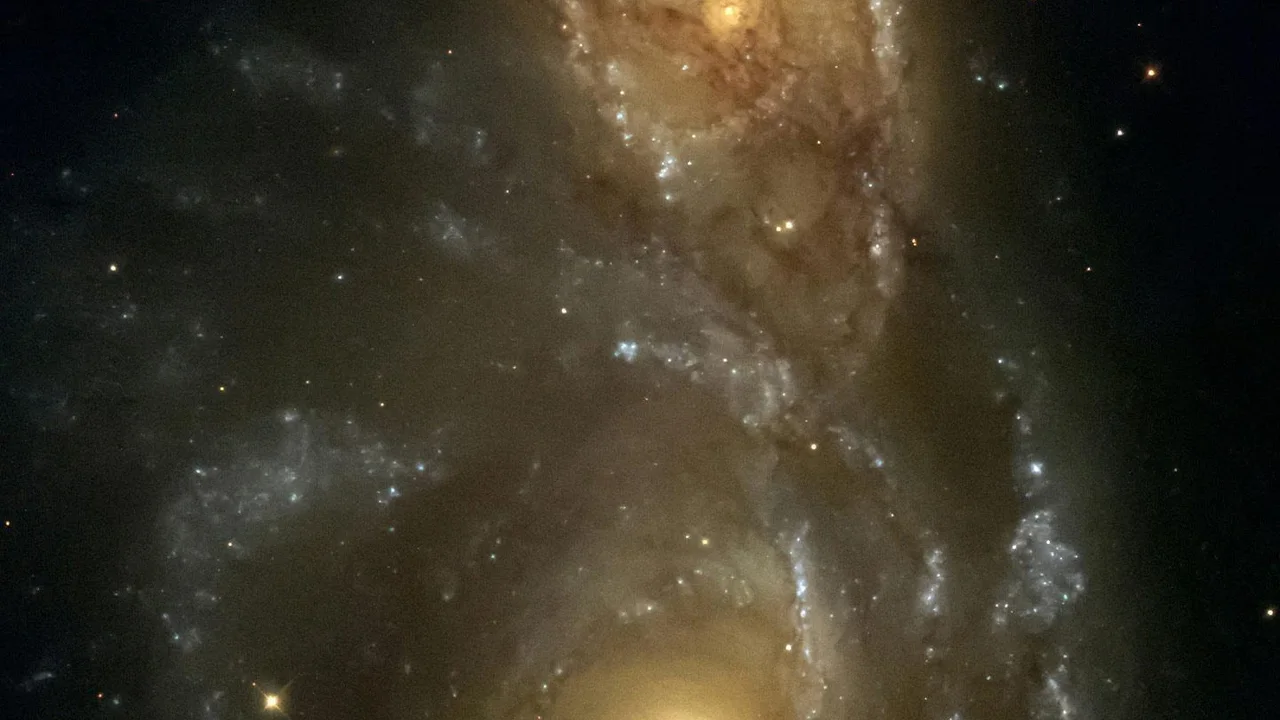
What makes this particular image so instructive is that each pair tells a different story. The top pair features a fascinating polar ring galaxy, NGC 4650A, but astronomers believe it is likely not interacting with its apparent partner at this moment. Its unique structure is probably the result of a collision that happened in its distant past. The middle pair looks like it could be interacting, but a study of their relative speeds suggests this is unlikely; they are a classic example of a chance alignment. It is only the bottom pair, NGC 4622A and NGC 4622B, that are truly engaged in a gravitational tango. They are actively interacting and are expected to merge into a single, larger galaxy in about a billion years.
More Than Just a Pretty Picture
While it might be disappointing to learn that some galactic pairs are not actually together, these chance alignments are incredibly useful for scientists. When one galaxy is positioned in front of another, the background galaxy acts as a backlight. This allows astronomers to study the dust and gas in the spiral arms of the foreground galaxy in great detail, as they become silhouetted against the light from behind. This technique helps them map the distribution of interstellar matter, which is otherwise difficult to see. In other cases, the immense gravity of a foreground galaxy can bend and magnify the light of a background object, a phenomenon known as gravitational lensing, providing a natural telescope to see even more distant parts of the universe.
Reading Between the Cosmic Rays
Ultimately, the image of these three pairs serves as a beautiful and powerful reminder that the universe is not always as it seems. It challenges our earthbound intuition about space and distance, pushing us to look beyond the surface. We learn that every cosmic portrait has a story that unfolds with scientific data, revealing whether the subjects are true partners, distant strangers passing in the night, or echoes of a past encounter. It teaches us to ask not just "What am I seeing?" but also "What is really happening?" This shift in perspective is what turns a stunning picture into a profound lesson about the true scale and depth of the cosmos.