




More Than Just a Simple Nudge
Planetary defense often conjures images of a single, heroic mission to intercept a celestial threat. The reality, however, is a complex problem of physics and engineering. One of the leading concepts for deflecting a large asteroid involves detonating
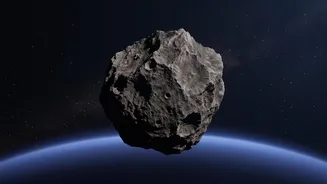
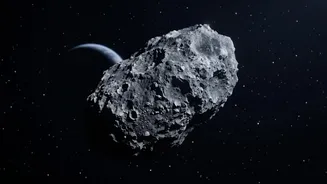
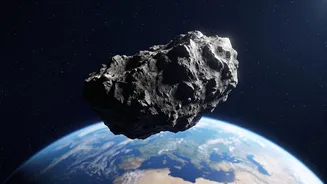
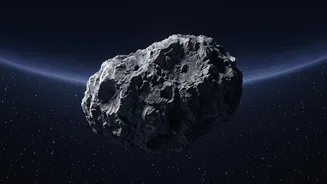
a nuclear device at a distance. The idea isn't to shatter the rock, but to use the intense burst of X-rays from the explosion to rapidly heat one side of the asteroid. This process, called vaporization, would cause surface material to blast away, creating a powerful push—like exhaust from a rocket—that nudges the asteroid onto a new, safer trajectory. For years, many simulations of this process made a convenient simplification: they treated asteroids as perfect spheres. But as new research from Sandia National Laboratories shows, that assumption misses a crucial part of the story. Real asteroids aren't smooth marbles; they are lumpy, irregular bodies with ridges, craters, and uneven shapes. This new study reveals that these irregularities can drastically change the outcome of a deflection attempt.
Simulating the Unthinkable
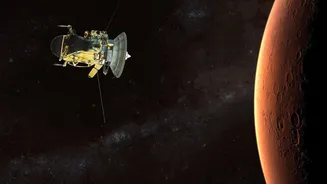
To explore how an asteroid's shape affects its response to a blast, scientists at Sandia developed a highly advanced computer model. Led by physicist Nathan Moore, the team created what they describe as the most accurate asteroid deflection model to date. Previous models forced a choice between using a detailed, realistic asteroid shape or performing high-fidelity calculations of the physical forces involved; doing both at once was too computationally expensive. The Sandia team overcame this by combining two specialized software programs, ALEGRA and SPARTA, and developing a new algorithm that runs over 1,600 times faster than older methods. This breakthrough allows researchers to use detailed 3D images of real asteroids—like Bennu and Itokawa, captured by spacecraft flybys—and simulate a nuclear X-ray burst with unprecedented accuracy. The model calculates how material vaporizes across the lumpy surface and then estimates the resulting push, the change in rotation, and the extent of surface damage.
Direction Makes All the Difference
The results of the simulations were startling. The study, published in the journal Icarus, found that changing the direction of the X-ray blast could produce vastly different results, even on the same asteroid. In one simulation, irradiating an asteroid from one direction produced a change in its forward speed of 3.9 millimeters per second. When the blast came from another direction, the speed changed by only 0.8 millimeters per second. That's a nearly fivefold difference in deflection effectiveness, all based on where the blast was aimed. 'We expected aim to matter,' said Moore in a press release. 'What surprised us was how much'. The effect on the asteroid's rotation was even more dramatic. For another simulated asteroid, the change in how quickly it spun varied by a factor of 17 depending on the direction of the blast. An uncontrolled, high-speed tumble could make a follow-up mission impossible or, worse, increase the risk of the asteroid breaking into multiple hazardous fragments.
Designing a Better Planetary Defense
This research has significant implications for future planetary defense strategies. It makes clear that a 'one-size-fits-all' approach is not enough. To successfully deflect an incoming threat, we would first need to know its shape in great detail. The study highlights the critical importance of observation and characterization missions that can create detailed 3D models of potentially hazardous asteroids long before they become an immediate threat. This work provides a powerful new tool for mission planners. Instead of relying on simplified spherical models, they can now run numerous simulations on a realistic model of a specific asteroid, testing different blast yields, distances, and angles to find the optimal solution. This allows them to compare outcomes and identify the approach that provides the most effective push with the least dangerous side effects, such as a chaotic spin or fragmentation. While a kinetic impactor like NASA's DART mission is a proven method for smaller bodies, the nuclear deflection option remains a leading contender for larger asteroids or when there is a shorter warning time. This new research makes that option much more predictable and, therefore, more viable.