





Decoding the New Safety Blueprint
In early August 2026, the Ministry of Road Transport and Highways (MoRTH) issued a draft notification for a new connected-car safety plan. The core idea is to create a network where vehicles can communicate with each other in real-time, a technology known
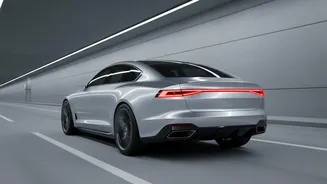
as Vehicle-to-Vehicle (V2V) communication. This is part of a larger global push towards Vehicle-to-Everything (V2X) technology, which allows cars to also talk to road infrastructure like traffic lights (V2I) and even pedestrians carrying compatible devices (V2P). The recently proposed rules aim to make these V2V systems mandatory for all new cars, two-wheelers, and commercial vehicles manufactured from October 1, 2028. This marks a significant policy shift, moving beyond existing safety features that rely on a single car's sensors to a collaborative, network-based approach to preventing accidents before they happen.
The Tech Behind the Warning
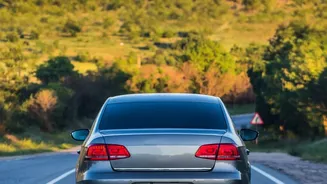
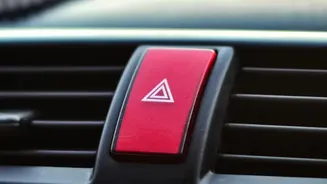
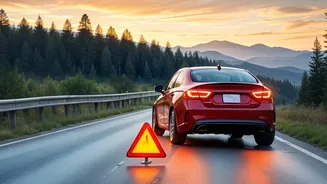
So, how does a sudden-braking alert actually work? A V2V-equipped car continuously broadcasts basic information like its speed, position, and direction via a low-latency radio signal. When that car slams on its brakes, it instantly sends out a digital 'emergency brake alert'. Nearby vehicles receive this alert in milliseconds, flashing a warning on the driver's dashboard long before they might see the actual brake lights. This is a crucial upgrade from current Advanced Driver Assistance Systems (ADAS), which use cameras and radar. While ADAS is effective, it can only react to what it can 'see'. V2V communication works even if the braking vehicle is hidden around a blind corner or obscured by a large truck, giving drivers precious extra seconds to react. The technology behind this, Cellular-V2X (C-V2X), leverages existing mobile network infrastructure, which helps reduce deployment costs and is seen as a scalable choice for India.
Why Start with Braking Alerts?
With all the potential applications of V2X technology, from traffic light synchronisation to wrong-way driver warnings, focusing on sudden braking is a strategic first move. Rear-end collisions are one of the most common types of accidents, often caused by delayed driver reaction. An emergency brake alert system directly addresses this frequent and dangerous scenario. It offers a clear, easily understood safety benefit and serves as a powerful proof-of-concept for the entire V2X ecosystem. By starting with a high-impact, relatively straightforward feature, regulators and manufacturers can build public trust and demonstrate the life-saving potential of connected-vehicle technology. This initial application is a foundational layer upon which more complex safety features, like forward collision warnings and alerts for approaching emergency vehicles, can be built.
A Glimpse of the Future for Indian Roads
While braking alerts are the beginning, they unlock a future of much smarter and safer transportation. On India's uniquely heterogeneous roads, where cars, buses, two-wheelers, and pedestrians share the same space, the benefits could be transformative. V2X technology could warn a car driver about a scooter in their blind spot or alert a truck about a pedestrian stepping into an unlit crossing. It has the potential to smooth traffic flow, reduce congestion, and cut fuel consumption by allowing vehicles to communicate with traffic signals. For a country that records one of the world's highest numbers of road fatalities, this technology represents a shift from reactive safety measures to proactive accident prevention. The plan to include two- and three-wheelers in the mandate from the start is particularly significant for improving the safety of vulnerable road users.
Challenges on the Road Ahead
The path to fully connected roads is not without its hurdles. One of the biggest challenges is achieving 'critical mass'—the technology is most effective when a large percentage of vehicles on the road are equipped with it. During the initial rollout, new V2V-equipped cars will share the road with millions of older, non-connected vehicles. Another major concern is cybersecurity. A network of talking cars could be vulnerable to malicious attacks, such as fake emergency warnings designed to cause chaos. Regulators will need to establish robust security and data privacy protocols to ensure every message is from a trusted source without creating a system of vehicle surveillance. Finally, the cost and complexity of fitting this hardware, especially on price-sensitive commuter motorcycles and scooters, will be a significant challenge for the industry to overcome.