









OFS vs. Fresh Issue: What's the Difference?
When a company launches an Initial Public Offering (IPO), it can raise money in two primary ways. The first is by issuing new shares, known as a 'fresh issue'. In this case, the money raised from selling these new shares goes directly to the company,
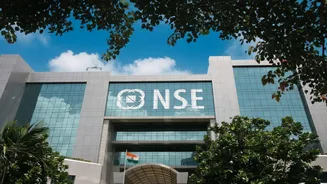
which it can then use for expansion, debt reduction, or other corporate purposes. The second method is an 'Offer For Sale' or OFS. In an OFS, existing shareholders, like promoters or early investors, sell their own shares to the public. The key difference is that the proceeds from an OFS go to the selling shareholders, not to the company itself. An IPO can be a mix of both, but in the case of the NSE, it is a 100% OFS, meaning the exchange is not raising any new capital for its own books.
Why Is the NSE Opting for a Pure OFS?
The decision to structure the IPO as a complete Offer For Sale signals one crucial fact: the National Stock Exchange is not in need of fresh capital. As India's largest and highly profitable stock exchange, it already has a strong balance sheet and sufficient internal funds for its operational and expansion needs. The primary purpose of this IPO, therefore, is not to fund the company's growth but to provide an exit route for its existing shareholders. This allows early and long-term investors, which include a wide range of banks, insurance companies, and investment funds, to finally monetise their holdings and unlock the value of their investment by selling their stakes to the public. The listing also achieves the goal of making the NSE a publicly-traded entity, which increases transparency and share liquidity.
Who Is Selling Their Shares?
The list of sellers in the NSE IPO is a who's who of the Indian financial sector and global investment. According to the draft prospectus, the public issue will see existing shareholders collectively sell nearly 6% of the exchange's equity. State Bank of India (SBI) is set to be one of the largest sellers, offloading a significant chunk of its shares. Other major domestic institutions participating in the sale include Bank of Baroda, Stock Holding Corporation of India, and several public sector insurance companies like General Insurance Corporation, New India Assurance, National Insurance, and United India Insurance. Several global players such as MS Strategic (Mauritius) Ltd, Canada Pension Plan Investment Board, and Aranda Investments are also taking the opportunity to sell part of their stake. Notably, the Life Insurance Corporation of India (LIC), which is the NSE's single largest shareholder, has decided not to participate in the sale.
The Long and Winding Road to Listing
The NSE's journey to an IPO has been a marathon, not a sprint. The exchange first filed for a public listing way back in 2016. However, the plan was put on hold by the market regulator, the Securities and Exchange Board of India (SEBI), due to serious concerns over governance and the co-location controversy. The co-location case involved allegations that certain brokers were given unfair preferential access to NSE's trading data, allowing them to gain an advantage through high-frequency trading. This led to years of investigations, legal battles, and regulatory scrutiny that effectively stalled the IPO plans. After nearly a decade of navigating these complex issues, including a proposed settlement for the co-location case, the path has finally been cleared, allowing the exchange to proceed with its listing plans in 2026.
What Does This Mean for Retail Investors?
For the average retail investor, the NSE IPO is a landmark opportunity to own a piece of the very infrastructure that powers the Indian capital market. However, it's crucial to understand the implications of it being a 100% OFS. Since the money is going to selling shareholders, you are not funding the company's future growth but rather buying shares from existing investors. The investment thesis, therefore, rests on the future profitability and performance of the exchange itself, which is already a dominant and mature business. Investors will be betting on its continued leadership in trading volumes, its ability to innovate, and its potential for growth in a rapidly expanding Indian economy. The IPO is expected to value the exchange at over ₹5 lakh crore, making it one of the largest public issues in Indian history. As with any investment, it is vital for potential investors to carefully study the company's financials, risks, and valuation before making a decision.