






An Astronomical Oddity
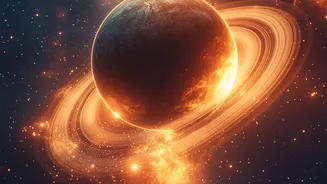
Located about 1,300 light-years away in the constellation Scorpius, WASP-17b is a gas giant that defies easy comparison. Discovered in 2009, it immediately stood out for two reasons: its enormous size and its incredibly low mass. While it has a radius
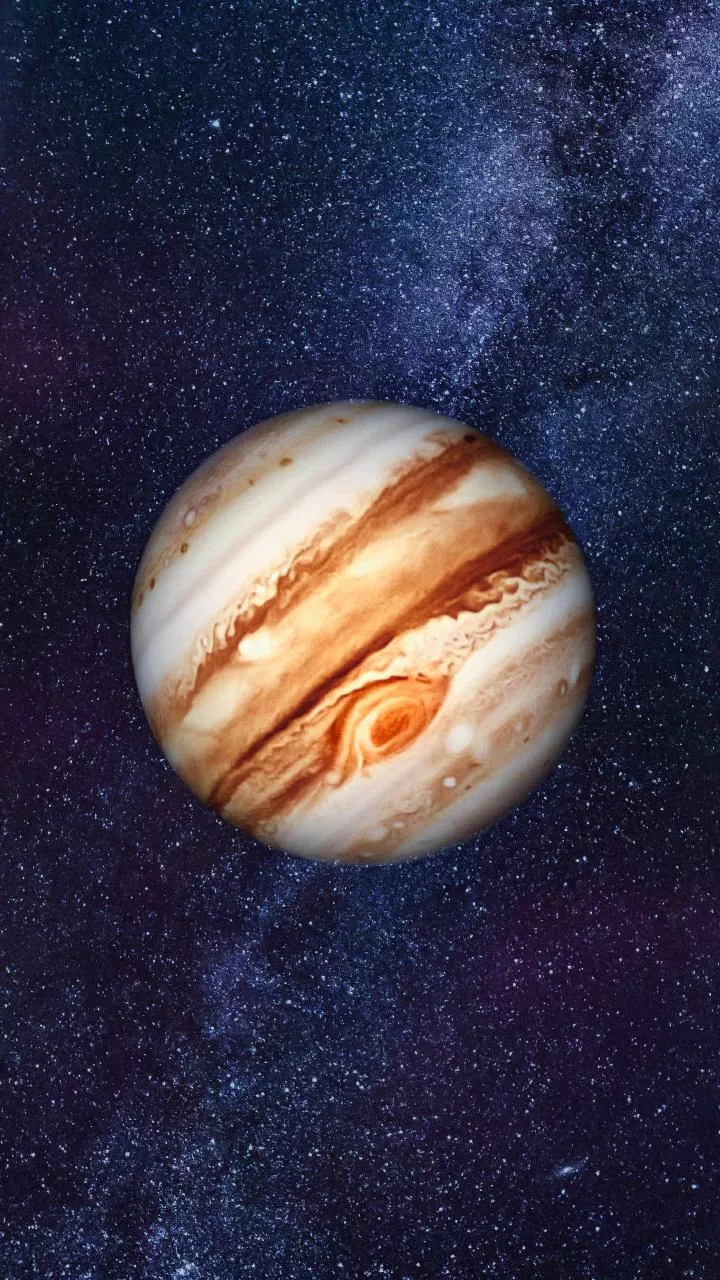
nearly twice that of our solar system's largest planet, Jupiter, it contains only about half of Jupiter's mass. This bizarre combination makes it one of the least dense planets ever discovered. Its average density is so low that scientists have compared it to styrofoam or a marshmallow, floating in stark contrast to the dense, rocky nature of Earth or even the composition of Saturn, our own system's least dense planet.
What Makes It So Puffy?
The extreme puffiness of WASP-17b is believed to be a result of its fiery-hot relationship with its host star. The planet orbits its star in just 3.7 Earth days, placing it in a category of worlds known as 'hot Jupiters'. This close proximity results in staggering atmospheric temperatures of around 1,500 degrees Celsius. The intense heat from the star causes the planet's mostly hydrogen and helium atmosphere to expand dramatically, much like a hot air balloon. Furthermore, the planet is 'tidally locked', meaning one side permanently faces the star in constant daylight, while the other remains in perpetual night. This extreme temperature difference drives ferocious winds that whip hot gas around the planet, contributing to its bloated and asymmetrical shape.
Clouds of Quartz Crystals
Recent groundbreaking research using the James Webb Space Telescope (JWST) has added another layer of intrigue to WASP-17b. Scientists detected the unmistakable signature of quartz nanocrystals in the planet's high-altitude clouds. This was the first-ever detection of silica particles in an exoplanet's atmosphere. Unlike clouds on Earth, which are made of water particles, these crystals are not swept up from a rocky surface. Instead, they form directly from gas in the planet's intensely hot and low-pressure upper atmosphere. While astronomers expected to find silicates, which are common in the galaxy, they anticipated magnesium-rich minerals like olivine or pyroxene. The discovery of pure quartz clouds provides a crucial and unexpected clue into the atmospheric chemistry of such extreme worlds.
A Lopsided World
The same JWST observations also revealed that WASP-17b isn't a perfect sphere. Using a new technique called 'transmission strings', researchers mapped the planet's silhouette as it passed in front of its star. They found that the atmosphere is lopsided, with one edge bulging out more than the other. This bulge corresponds to the 'evening' side of the planet—the boundary where the scorching dayside transitions to the dark nightside. Supersonic winds are thought to drag the superheated atmospheric gases from the dayside eastward, causing them to pile up and expand the atmosphere on the evening limb. This finding provides the first direct observational proof that exoplanet atmospheres are complex, 3D structures shaped by dynamic weather systems.
Why We Study 'Super-Puffs'
Studying bizarre planets like WASP-17b is more than just an astronomical curiosity. These extreme worlds serve as natural laboratories that push the limits of our scientific models. By observing how planets form and behave under conditions vastly different from our own, scientists can refine their theories on planetary evolution. Understanding the atmospheric composition, temperature dynamics, and weather patterns on a 'super-puff' helps answer fundamental questions about the diversity of planets in our galaxy. Each discovery, from quartz clouds to lopsided atmospheres, provides another piece of the puzzle, helping us understand our own solar system's place in the universe.