






A Steady Hand in a Sudden Storm
Colette Kress, Nvidia’s respected executive vice president and chief financial officer since 2013, has been appointed interim CEO following the abrupt resignation of Jensen Huang on November 12. Kress, a veteran of the tech industry with a nearly 25-year
career that includes senior finance roles at Microsoft and Cisco, is seen by many as a stabilizing force. Described as a 'pragmatist' and a calming contrast to Huang’s famously intense style, Kress has been a central figure in communicating Nvidia’s strategy to investors for years. The board expressed its full confidence in her leadership, stating that it expects operations, customer commitments, and the product roadmap to continue without interruption. Kress will also continue her duties as CFO while the board begins a formal search for a permanent successor, considering both internal and external candidates.
The Unprecedented Departure of a Founder
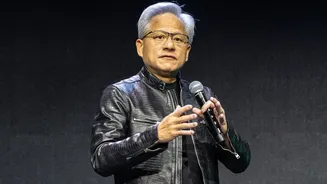
The leadership change was triggered by Huang’s voluntary resignation after he disclosed 'personal behavior inconsistent with the company's code of conduct'. The resignation came after several days of intense scrutiny and reports concerning his personal life, including allegations of extramarital affairs and a potential national security inquiry. In a statement, Huang acknowledged he had 'made serious mistakes' and created problems for the board. Despite a subsequent social media post from Huang stating he would be 'honored' to return if the board wished, the newly appointed board chair, Harvey Jones, has been clear: the board unanimously accepted Huang's resignation and does not intend to reinstate him.
The AI Roadmap Remains Unchanged
For customers and investors, the most critical message from the new leadership has been one of continuity for its core business: artificial intelligence. Kress and the board have firmly stated that Nvidia’s aggressive AI roadmap is unchanged. The company’s one-year product cadence, a strategy that has kept it far ahead of competitors, will continue. This includes the rollout of the Blackwell platform, the upcoming 'Rubin' GPU architecture slated for release in the second half of 2026, and its successor 'Rubin Ultra' in 2027. In her first earnings call as interim CEO, Kress confidently raised the company's growth outlook, signaling that the engine of Nvidia's AI 'token factory' is still running at full speed.
Reassuring a Jittery Market
While Nvidia’s stock saw an initial dip following the news, the market has processed the transition with cautious optimism. The company’s first quarterly earnings report under Kress beat Wall Street expectations, with revenue of $115.8 billion and a forecast for the next quarter that also exceeded analyst predictions. To reassure employees amid the uncertainty, Kress used her first company-wide meeting to announce that pay raises and equity awards would be brought forward from March to December. Analysts have had mixed reactions. Some see Kress as the pragmatic leader needed to calm markets, while others question whether a finance executive can provide the long-term technical vision that Huang embodied. Nonetheless, her initial performance and the strong quarterly results have demonstrated that, from a business perspective, it is 'business as usual'.