



It's Not a Star, It's a Rock
The first thing to know is that a shooting star has nothing to do with an actual star. A star is a massive, distant ball of gas undergoing nuclear fusion, like our own Sun. That beautiful streak you see is much closer to home and much, much smaller. It
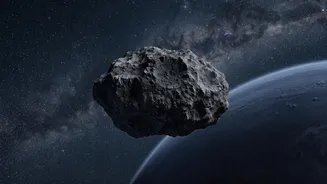
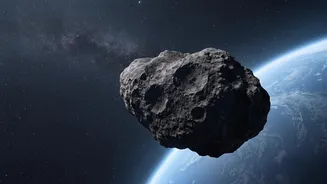
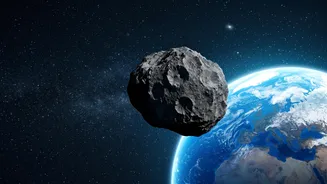
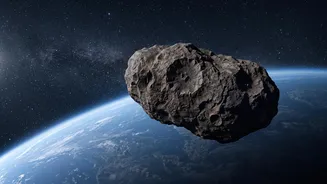
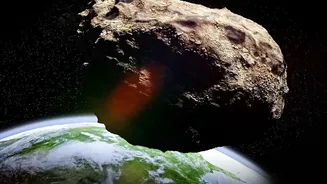
is, in fact, a small piece of rock or dust, often no bigger than a grain of sand or a pebble, called a meteoroid. These objects are scattered throughout our solar system, remnants from the formation of planets or debris shed by comets and asteroids.
Meteoroid, Meteor, Meteorite: What's the Difference?
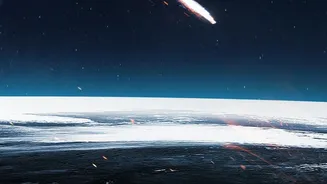
The terminology can be confusing, but it all comes down to location. While the rock is still floating in the vastness of space, it's called a meteoroid. When it hits Earth's atmosphere and begins to burn up, creating that visible streak of light, it's called a meteor. Most of these are completely vaporised. However, if a piece of the rock is large enough to survive the fiery journey and land on the ground, that surviving fragment is called a meteorite. So, it's the same object, just with a different name for each stage of its journey.
The Science of the Streak
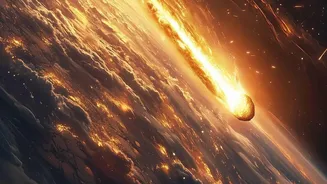
What causes that brilliant flash of light? It's not the rock itself burning, at least not in the way you might think. Meteoroids enter our atmosphere at incredible speeds—anywhere from 25,000 to 160,000 miles per hour. At this velocity, the object violently compresses the air in front of it. This extreme compression generates immense heat, which causes the air molecules and the vaporising material from the meteoroid to glow intensely. This process, called ionisation, creates the luminous trail we see as a meteor, or shooting star. The colour of the light can even give clues about the meteoroid's composition; iron glows yellow, while magnesium can burn blue-green.
Where Do They All Come From?
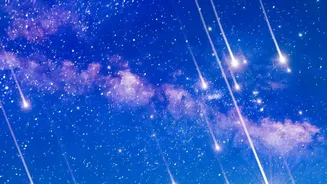
Millions of meteors occur in Earth's atmosphere every day. The steady rain of space dust amounts to an estimated 44,000 kilograms (about 48.5 tons) of material falling on Earth daily, mostly as microscopic particles. Most meteoroids are fragments left over from the formation of our solar system. Many come from the asteroid belt, a vast ring of space rocks between Mars and Jupiter. Others are dusty debris shed by comets as they orbit the Sun. When Earth passes through one of these dusty trails, we get a meteor shower, where many shooting stars can be seen originating from the same point in the sky. Famous showers like the Perseids in August are created by debris from the comet Swift-Tuttle.
A Celestial Light Show
While most shooting stars are caused by particles that burn up entirely, larger objects can create more dramatic events. A particularly bright meteor is known as a fireball. If a fireball explodes in the atmosphere, it's called a bolide, and it can be bright enough to be seen in the daytime and may even produce a sonic boom. Finding a meteorite on the ground is rare, as less than 5% of the original object usually survives the trip through the atmosphere. The vast majority of the celestial visitors we see are just tiny specks of dust, putting on a final, brilliant show high up in the mesosphere, about 75 to 120 kilometres above our heads.