





Simulating the Moon in Houston
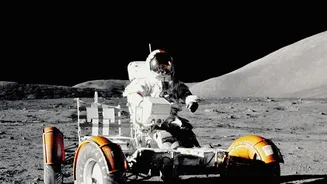
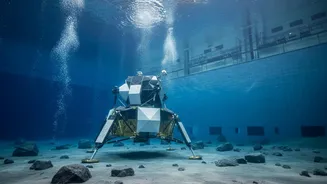
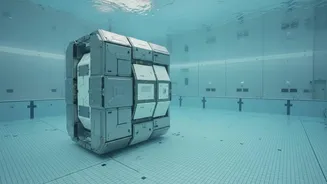
Walking on the Moon is not easy. The Moon's gravity is just one-sixth of Earth's, creating a bizarre, bouncy environment that is difficult to replicate. To prepare astronauts, NASA uses the Neutral Buoyancy Laboratory (NBL) in Houston, a massive indoor
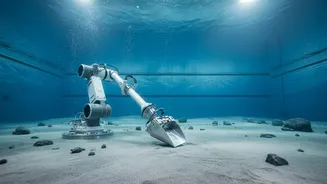
pool containing 6.2 million gallons of water. By carefully weighting the new spacesuits, engineers can make an astronaut feel as if they are working in lunar gravity. This underwater training ground allows crews to practice complex tasks, from navigating terrain to collecting rock samples, long before they leave Earth. The goal is to understand the limits of the new suits and refine procedures for the Artemis missions, which will send humans back to the lunar surface for the first time in over 50 years.
A New Suit for a New Era
The spacesuits being tested are not the bulky white suits of the Apollo era. Known as the Axiom Extravehicular Mobility Unit (AxEMU), these next-generation suits are being developed by a commercial partner, Axiom Space. This represents a major shift in NASA's strategy, moving from developing all hardware in-house to collaborating with private industry. The AxEMU is designed for greater flexibility and mobility, allowing astronauts to bend, kneel, and handle tools with more ease than their predecessors. It also features advanced life support systems and is designed to fit a wider range of body types, making space exploration more accessible. The design, a collaboration between Axiom Space and Italian fashion house Prada, even incorporates enhanced coatings on the helmet to improve visibility in the harsh lunar environment.
Putting the AxEMU to the Test
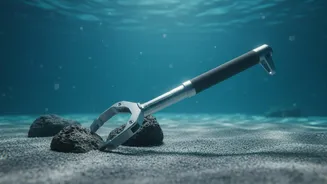
Recent crewed tests in the NBL have marked significant milestones for the AxEMU program. Astronauts and engineers have donned the suits to perform a variety of simulated lunar tasks. These include practicing with geology tools like hammers and tongs, collecting samples, and even planting a flag on a submerged mock-up of the lunar surface. These tests are about more than just movement; they evaluate the suit's critical systems, including communications, breathing, and cooling. In September 2025, NASA conducted the first test with two suited astronauts working together, a key step in rehearsing the collaborative spacewalks that will define the Artemis missions. Every hour spent underwater provides invaluable data on the suit's performance and helps build astronauts' confidence in their gear.
Finding the Boundaries
While the NBL is an incredible training tool, it isn't a perfect simulation. The primary challenge is that while buoyancy can mimic the feeling of reduced gravity, the astronaut is still moving through water. The drag and resistance of the water are factors that don't exist on the airless Moon. This is why the tests are so focused on understanding the suit's 'movement limits.' Engineers want to find the edge of what's possible, identifying any restrictions on an astronaut's range of motion. This data is critical for planning spacewalks, ensuring that the tasks assigned to astronauts are achievable within the suit's capabilities. Other tests are also conducted in different facilities to simulate the extreme temperatures and lighting conditions of the lunar south pole, where the Artemis III mission is slated to land.
From the Pool to the Lunar South Pole
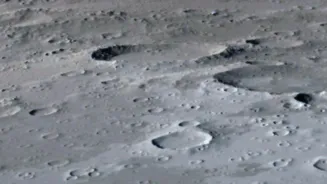
Every test, whether underwater at the NBL or in a thermal vacuum chamber, is a step toward the Artemis III mission. This mission, currently scheduled for the mid-2020s, will land the first woman and first person of color on the Moon, exploring the scientifically valuable south pole region. The success of these future moonwalks depends on the rigorous testing happening today. By vetting the AxEMU spacesuits on Earth, NASA and its commercial partners are working to ensure that when astronauts step onto the lunar dust, they are equipped with the safest, most capable hardware possible. These underwater rehearsals are laying the foundation for a sustainable human presence on the Moon and, eventually, for the next giant leap to Mars.