




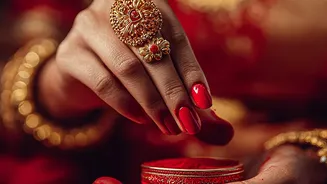
A Day of Devotion and Ritual
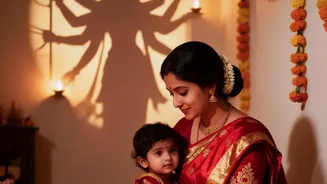
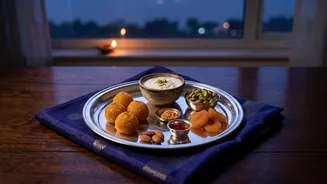
Karwa Chauth is a festival steeped in tradition, celebrated on the fourth day after the full moon in the Hindu month of Kartik. The day begins before sunrise with a meal known as 'sargi', often provided by a mother-in-law, which is meant to sustain the fasting
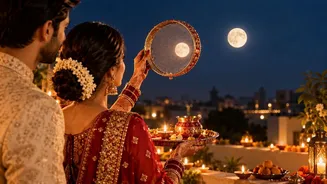
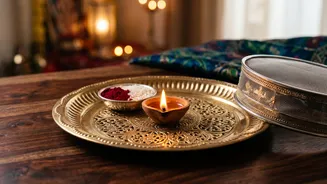
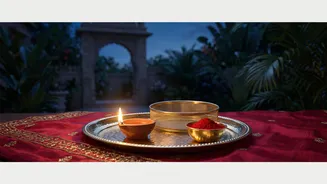
woman until moonrise. From dawn, women undertake a strict 'nirjala' fast, abstaining from both food and water. The day is spent in preparation and prayer, often with women gathering to apply henna, dress in festive attire, and narrate the stories, or 'katha', associated with the festival. The fast is broken only after sighting the moon, which is viewed through a sieve, followed by the sight of their husband, who then offers his wife the first sip of water and morsel of food.
The Legend of Queen Veeravati
The most widely told story is that of Queen Veeravati, the beautiful and only sister to seven loving brothers. During her first Karwa Chauth at her parents' home, she observed the strict fast. By evening, however, she was overwhelmed by hunger and thirst. Unable to see their sister suffer, her brothers devised a plan. They created the illusion of a moonrise, either by holding a mirror in a pipal tree or by lighting a large fire behind a mountain. Deceived, Veeravati broke her fast. Immediately, she received word that her husband, the king, was dead. Heartbroken, she began the journey to his kingdom. On the way, she met the goddess Parvati, who revealed the trickery of her brothers and explained that breaking the fast prematurely had caused her husband's death. Parvati advised her to re-do the fast with absolute devotion. Veeravati did so, and upon its completion, the god of death, Yama, was compelled to restore her husband's life.
The Power of a Devoted Wife
Another prominent legend is that of a woman named Karva, whose devotion to her husband was so powerful it gave her spiritual abilities. One day, her husband was attacked by a crocodile while bathing in a river. Karva rushed to the scene and bound the crocodile with a simple cotton thread. She then went to Lord Yama and demanded he send the crocodile to hell and spare her husband. When Yama initially refused, she threatened to curse him. Fearing the power of a truly devoted wife, Yama relented, saving her husband and punishing the crocodile. This tale reinforces the belief in the protective power of a wife's devotion, a central theme of the festival.
From Legend to Modern Legacy
These stories, passed down through generations, are more than just myths; they are the emotional and cultural anchors of the festival. They explain the importance of the moonrise, the unwavering nature of the fast, and the belief in its power. The legends of Veeravati and Karva serve as yearly reminders of the virtues of love, sacrifice, and marital fidelity. While the core traditions remain, Karwa Chauth has evolved. Today, it is also seen as a celebration of the bond between couples. In a modern shift, some husbands now fast alongside their wives as a gesture of mutual love and support, blending ancient tradition with a contemporary spirit of partnership. The festival has also gained visibility through popular culture, turning it into a wider celebration of love and togetherness that resonates with new generations.