





A Legacy of Nation-Building
For over five decades, the Indian Space Research Organisation (ISRO) has been the sole custodian of India's space ambitions. From launching its first satellite, Aryabhata, in 1975 to becoming a world leader in cost-effective missions to the Moon and Mars,
ISRO's primary goal has been national development. Its satellites have been crucial for telecommunications, weather forecasting, disaster management, and national security. This long history of building critical infrastructure and achieving self-reliance in space technology has established ISRO not just as an agency, but as a foundational pillar of modern India. This legacy of expertise, infrastructure, and institutional memory is precisely why it cannot simply be replaced by a nascent private industry.
The Dawn of a New Space Age
The year 2020 marked a turning point for India's space sector. The government formally opened the doors to private participation, leading to a boom in space-tech startups, which now number over 450. To manage this new landscape, the Indian Space Policy 2023 was introduced, clarifying the roles of different entities. The Indian National Space Promotion and Authorisation Centre (IN-SPACe) was created to act as a single-window agency to promote, authorise, and supervise the activities of private companies. Meanwhile, NewSpace India Limited (NSIL), ISRO's commercial arm, is tasked with commercialising technologies developed through public funds. This new architecture was designed not to diminish ISRO, but to expand India's overall share in the global space economy, which is currently less than 2%.
Shifting from Doer to Enabler
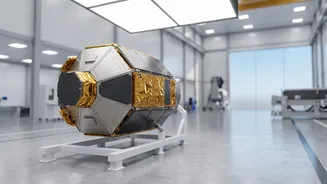
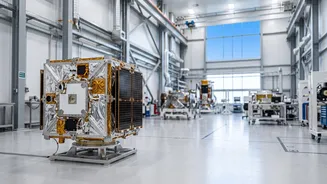
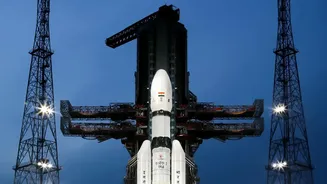
Contrary to concerns about privatisation, ISRO's role is evolving, not shrinking. The agency is strategically transitioning out of the routine manufacturing of operational systems like the Polar Satellite Launch Vehicle (PSLV) and other mature technologies. This production work is being transferred to private consortiums and public sector undertakings. By handing over these proven systems, ISRO frees up its top scientific talent and resources to focus on what it does best: pioneering advanced research and development. It now acts as an enabler, providing private firms with access to its world-class testing facilities, intellectual property, and decades of expertise through IN-SPACe, significantly accelerating their growth. This move helps create a resilient, self-reliant industrial ecosystem.
Pioneering the Final Frontier
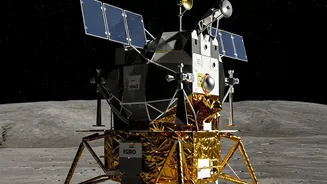
While private companies are well-suited to take over routine launches and satellite manufacturing, they currently lack the capital and risk appetite for deep-space exploration and strategic national missions. This is where ISRO's centrality becomes non-negotiable. The agency is now focusing its energies on frontier technologies and ambitious national goals. These include the Gaganyaan human spaceflight programme, developing next-generation heavy-lift launch vehicles, establishing an Indian space station by 2035, and landing an Indian astronaut on the Moon by 2040. These high-risk, high-reward missions are critical for India's strategic autonomy and scientific leadership, and for now, only a state-run agency like ISRO has the unique capability to execute them.
The Engine of a Multi-Billion Dollar Dream
ISRO's continued leadership is also a powerful economic driver. By acting as a mentor and an anchor client, it nurtures the very market that private players hope to capture. The goal is to grow India’s space economy from around $8-9 billion today to over $44 billion by 2033. This expansion can't happen in a vacuum. ISRO's technology transfers and partnerships allow startups to move faster from prototype to qualified hardware. Furthermore, the government, guided by ISRO's expertise, is becoming a major customer for private space companies, creating predictable demand. This symbiotic relationship, where ISRO pushes the technological boundaries and industry helps scale it, is the engine designed to power India’s ambitious economic targets in the global space market.