





A Discovery on the Turquoise Coast
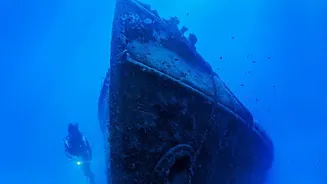
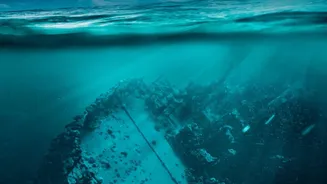
Deep beneath the waves near Kekova Island in Turkey's Antalya province, marine archaeologists have located what is being called the world's oldest known shipwreck. The team, led by Associate Professor Hakan Öniz of Akdeniz University, identified a trove
of artifacts resting on the seabed about 30 metres down. First documented in 2024, the site's significance has only recently been revealed through ongoing excavation. While the area is famous for the sunken ruins of an ancient Lycian city, this wreck predates those structures by thousands of years, offering a glimpse into a much deeper past.
A Vessel from the Dawn of Trade
While the wooden hull of the ship has long since disintegrated after nearly five millennia underwater, its contents tell a vivid story. Based on the spread of its cargo, researchers estimate the merchant vessel was about 10 to 15 metres long, a substantial size for its time. This was no simple fishing boat but an organized trade ship built for open-sea voyages. Its discovery provides concrete evidence for sophisticated maritime capabilities much earlier than previously thought. Before this find, other Bronze Age wrecks had illuminated ancient trade, but this ship is over a thousand years older, pushing back the timeline for complex, seaborne commerce in the Mediterranean.
How Pottery Tells Time
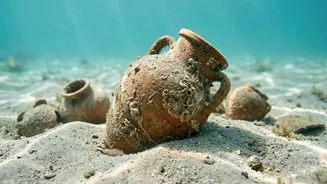
The key to unlocking the shipwreck's remarkable age lies in its cargo. Since no timber from the hull survived for radiocarbon dating, archaeologists turned to the more than 30 ceramic jars, or amphorae, scattered on the seafloor. Ceramics are a cornerstone of archaeological dating because their styles, materials, and manufacturing techniques are unique to specific cultures and periods. The amphorae from the Kekova wreck—with their distinctive side handles and flat bases—were compared to similar pottery found at sites in Egypt and the Levant, a region in the Middle East. This comparison allowed researchers to confidently date the wreck to the Early Bronze Age, between 4,400 and 4,700 years ago.
A Cargo of Clues
The amphorae were likely used to transport valuable commodities such as olive oil or wine. Clay analysis has even suggested some vessels were produced in workshops in the Jordan Valley, giving clues to the ship's origin. The prevailing theory is that the ship was sailing west from the Levantine coast, perhaps toward Crete or even Troy, when it sank. Alongside the jars, three large stone anchors were also discovered. One of the most intriguing finds is a unique jar with two holes, which researchers speculate may have been a churn for making butter or cheese at sea, hinting that sailors might have carried live goats on long voyages.
Rewriting Maritime History
The significance of the Kekova shipwreck cannot be overstated. It fundamentally alters our understanding of the ancient world's interconnectedness, providing a tangible link to sailors and merchants from a time when the great pyramids of Giza were being built. It demonstrates that long-distance maritime trade was a driver of civilization far earlier than previously proven by physical evidence. The discovery confirms that the technological and logistical challenges of building seaworthy ships and navigating the open ocean were being overcome almost 5,000 years ago, connecting distant cultures through the exchange of goods and ideas.