





Why AI is So Thirsty
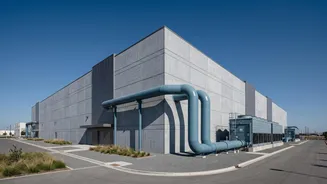
Artificial intelligence doesn't drink water in the literal sense, but the powerful data centres that train and run AI models are incredibly thirsty. These facilities house thousands of high-performance computer servers packed closely together. Running
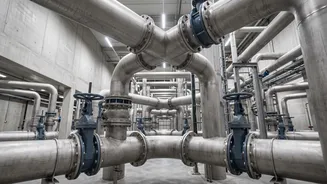
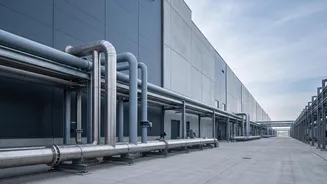
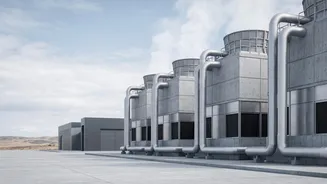
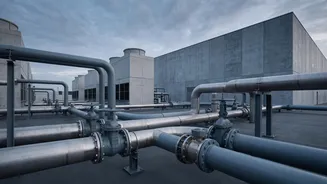
complex AI calculations generates an immense amount of heat. To prevent the sensitive electronics from overheating and failing, data centres require constant cooling. A common and energy-efficient method is evaporative cooling, which uses water. In these systems, vast cooling towers evaporate water to dissipate heat, functioning like a giant radiator for the entire building. A significant portion of the water used in this process is lost to the atmosphere as steam. This is why the explosion in AI workloads, which are far more intensive than traditional computing, is directly driving a surge in water consumption.
The Scale of the Water Footprint
The numbers associated with AI's water use are staggering. Training a large language model like GPT-3 can consume an estimated 700,000 litres of fresh water. On a daily basis, even simple interactions add up. Research has estimated that a conversation of just 10 to 50 queries with an AI chatbot can consume a 500ml bottle of water. At a larger scale, some big data centres can use up to 5 million gallons of water per day, which is comparable to the water usage of a town of up to 50,000 people. Projections show the problem is set to grow. One UN University study warned that by 2030, the global water footprint of AI infrastructure could equal the basic annual domestic needs of 1.3 billion people. This growing demand is putting a strain on local resources, particularly as many data centres are located in regions already experiencing water stress.
The Local Impact and a Growing Concern
While the benefits of AI are global, its environmental costs are often highly localized. Data centres draw massive amounts of water from local supplies, sometimes competing with residents and agriculture for a finite resource. Reports have highlighted that major tech companies like Microsoft and Google have seen their water consumption increase by over 20-30% in a single year, driven in part by AI growth. Much of this water is potable, or drinking-quality, water that, once used in cooling towers, is evaporated and effectively removed from the local water cycle. This has sparked concern in communities from the US to Europe, where data centre hubs are sometimes located in drought-prone areas. With India's own data centre market expected to grow significantly, the challenge of balancing technological progress with water stewardship is becoming a critical issue for the nation, which already faces high water stress in many regions.
Searching for Sustainable Solutions
The tech industry is aware of the problem and is exploring solutions to curb AI's water appetite. One of the most promising avenues is the adoption of alternative cooling technologies. Closed-loop cooling systems, for example, recycle water instead of constantly drawing fresh supplies, which can significantly reduce consumption. More advanced methods like direct-to-chip or immersion cooling involve using specialised liquids to cool components directly, which is more efficient and uses minimal to no water. Companies are also being encouraged to use non-potable water sources, such as recycled wastewater, for their cooling needs. Furthermore, simple operational changes, like scheduling intensive AI training tasks during cooler parts of the day, can reduce the amount of water lost to evaporation. However, with the demand for AI growing exponentially, efficiency gains alone may not be enough to contain the industry's overall water footprint.