



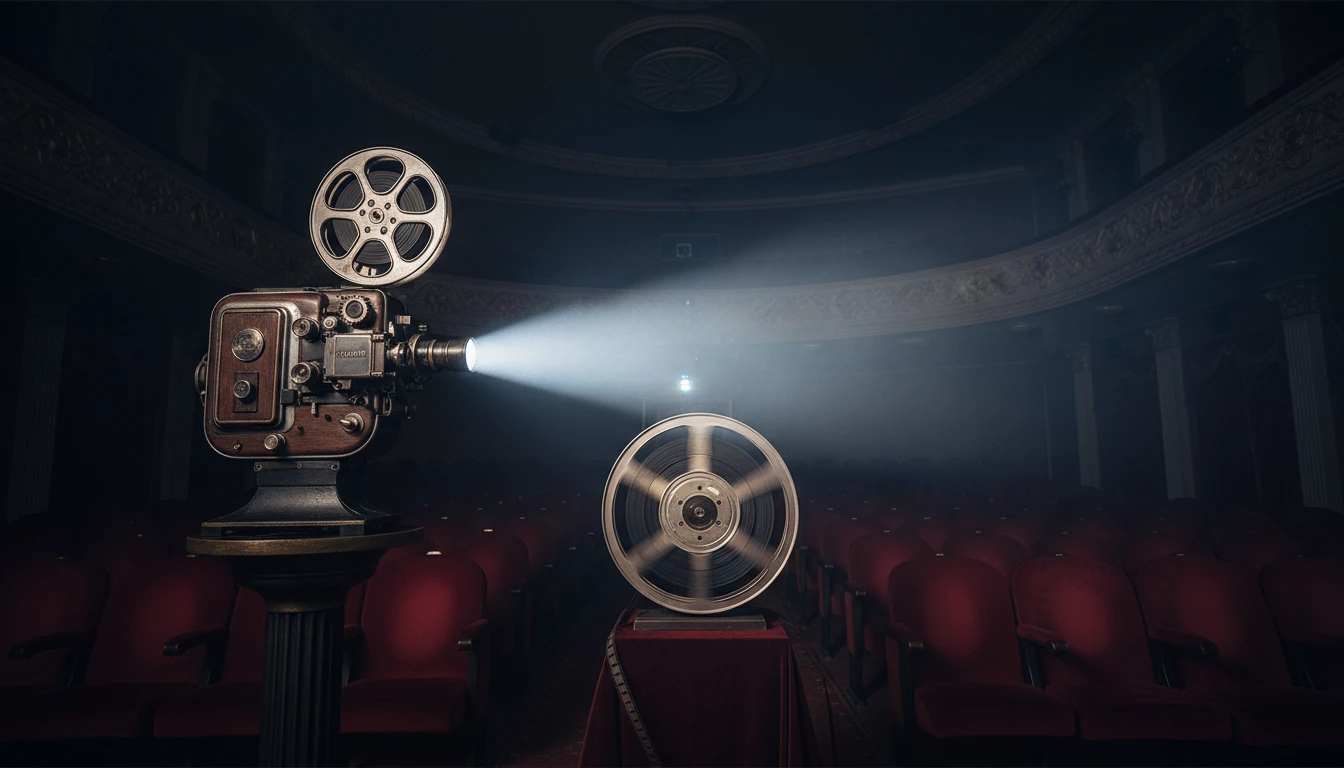


The Pinnacle of Cinema: What is 15/70mm?
When you hear that a movie is presented in IMAX, you expect a massive screen and booming sound. But not all IMAX is created equal. The “native format” for Christopher Nolan’s ‘The Odyssey’ is IMAX 15/70mm film, a celluloid format many consider the gold
standard of motion picture photography. The name itself is a technical description: the film runs horizontally through the projector, and each frame is a massive 70mm tall and 15 perforations wide. This creates a negative that is nearly nine times the size of a standard 35mm film frame. For the audience, this translates to an image with staggering detail, equivalent to a digital resolution of 16K or even 18K—far surpassing the 4K projection found in most high-end digital cinemas. Nolan has used this format for key sequences in past films like 'The Dark Knight' and 'Oppenheimer', but 'The Odyssey' is the first feature to be shot entirely on these massive cameras.
A Vision of Immersion
For Nolan, using IMAX 15/70mm isn't just about technical bragging rights; it's about disappearing the screen. The format’s unique 1.43:1 aspect ratio is much taller than typical widescreen formats, filling a viewer's peripheral vision from top to bottom on a true IMAX screen, which can be as large as 79 by 59 feet. The director’s goal is to create a feeling of 3D without the glasses, immersing the audience so completely in the world of the film that they forget they are watching a movie. This pursuit required overcoming significant hurdles. The IMAX film cameras are notoriously noisy, which is why they were previously used mainly for action sequences with little dialogue. For 'The Odyssey', a new sound-dampening enclosure was developed, allowing even intimate, dialogue-heavy scenes to be captured with the format's unparalleled clarity and scope.
The Scarcity of Spectacle
This commitment to analog purity comes with a major catch: the infrastructure to project it has become exceedingly rare. Since the widespread switch to digital projection in the 2010s, most theaters have abandoned their cumbersome and costly film projectors. As a result, only around 41 theaters in the entire world retain the specialized IMAX 15/70mm projectors needed to screen 'The Odyssey' as Nolan intended. Of those, around 25 are in the United States and nine are in Canada, leaving just a handful for the rest of the globe. This means less than 3% of the world's 1,800+ IMAX-branded theaters can actually show the film in its native format. For everyone else, the movie will be a digital conversion, which, while still impressive on a laser-powered IMAX screen, lacks the organic texture and sheer resolution of the original film print.
A Global Hunt for a Golden Ticket
The extreme scarcity has turned finding a ticket for an IMAX 70mm screening into a cultural event. For the release of 'The Odyssey', fans have reported spending hundreds of dollars, planning road trips, and battling crashing apps to secure a seat in one of the coveted auditoriums. This intense demand highlights a paradox in modern blockbusters: filmmakers are pushing for grander, more spectacular theatrical experiences at the same time the ability to deliver them is dwindling. Some directors, like Nolan, Quentin Tarantino, and Paul Thomas Anderson, are fueling a '70mm renaissance,' and theaters that kept their projectors specifically for Nolan releases are now at the center of this movement. This exclusivity, while frustrating for many, transforms a trip to the movies into a pilgrimage, a destination event for those dedicated to seeing film artistry at its most ambitious.