


Introducing the PUFFINS Mission
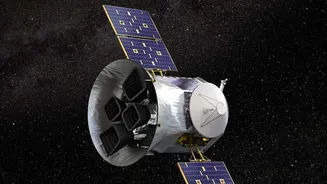
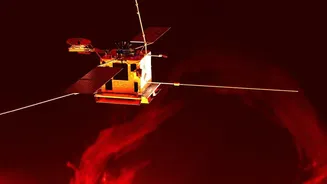
PUFFINS, which stands for 'Polarimetry in the Ultraviolet to Find Features in INterStellar dust', is a small satellite mission funded by NASA’s Astrophysics Pioneers programme. At its heart is a 10-inch telescope designed to do something very specific:
study the ultraviolet light from at least 70 different stars. Led by principal investigator Dr. Ramya Anche of the University of Arizona, a Bengaluru-born astronomer, the $20 million mission aims to fill a long-standing gap in our understanding of the universe. It will focus on the smallest, most mysterious grains of interstellar dust—particles roughly the size of a virus, which are invisible to many other telescopes. By studying how this dust interacts with starlight, scientists hope to unlock fundamental secrets about the galaxy.
What Is Polarised Starlight?
Light from a star typically travels as waves that vibrate in all directions. However, when this light passes through a medium, like a cloud of interstellar dust, it can become 'polarised'. Think of it like a wave passing through a picket fence; only the parts of the wave that align with the gaps can get through. In space, elongated dust grains that are aligned by the galaxy's magnetic field act like this fence. They preferentially block or scatter light waves vibrating along their long axis. This results in the starlight that reaches our telescopes having a dominant vibration direction—it is now polarised. By measuring this polarisation, astronomers can work backwards to deduce information about the dust and the invisible magnetic fields that aligned it.
Cosmic Dust: More Than Just Dirt
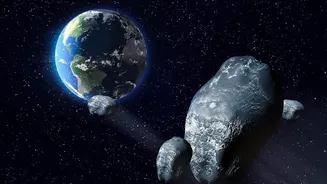
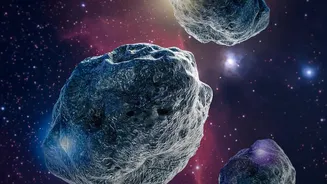
Interstellar dust may sound insignificant, but it is a critical component in the lifecycle of the cosmos. These tiny particles, composed of elements like carbon, silicon, and oxygen, are the raw materials for new stars and planets, including our own. They shield complex molecules from destructive radiation, regulate temperature in galactic clouds, and play a key role in chemical evolution. However, much about the smallest dust grains remains a mystery. The PUFFINS mission will focus on ultraviolet (UV) light because these smaller grains interact more strongly with shorter wavelengths. Understanding their composition, structure, and behaviour is essential for building a complete picture of how planetary systems form and evolve.
How PUFFINS Will Uncover the Dusty Story
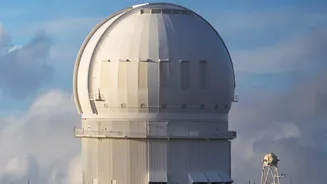
Set to launch into low-Earth orbit around 2030, PUFFINS will revive a technique called ultraviolet spectropolarimetry from space, which hasn't been done for nearly three decades. Its specialised telescope will measure the polarisation of UV starlight across different wavelengths. This data will provide unique insights into the dust's mineralogy, size, and how it behaves in different cosmic environments, from stellar nurseries to the clouds of neighbouring galaxies. The mission will also combine its space-based UV data with ground-based observations from telescopes like the one at McDonald Observatory to get a more complete picture of the interstellar gas and dust.
Building Toward the Future of Astronomy
The knowledge gained from PUFFINS won't just solve old mysteries; it will pave the way for future discoveries. The mission is considered a crucial scientific precursor to NASA's planned Habitable Worlds Observatory (HWO), a major flagship telescope set for the 2040s. By testing and refining UV polarimetry technologies, PUFFINS will help define the capabilities of future, more powerful instruments designed to search for signs of life on distant exoplanets. It serves as both a groundbreaking science mission and a vital training ground for the next generation of astronomers, turning the subtle twinkle of polarised starlight into a clearer vision of the universe.