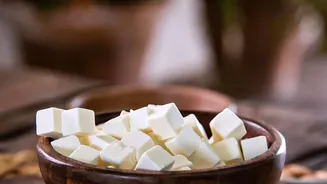




The Pervasive Problem of Fake Paneer
The demand for paneer in India often outpaces the supply of pure milk, creating a gap that some unscrupulous producers fill with counterfeit products. This adulterated or 'analogue' paneer is frequently made using cheaper substitutes to maximize profits.
Common adulterants include starch, which adds bulk, and vegetable fats like palm oil used to mimic the richness of milk fat. More alarmingly, some fake paneer is made from synthetic milk, a dangerous concoction of chemicals, detergents, and urea. Recent food safety investigations have revealed shocking statistics, with a high percentage of paneer samples from some areas failing to meet quality standards. These adulterants not only cheat consumers but also pose significant health risks, ranging from digestive problems to severe kidney and liver damage from long-term exposure to toxic chemicals.
The Allure and Limits of Home Testing
In response to these concerns, numerous do-it-yourself tests have become popular. Many articles and videos suggest simple methods to check paneer purity at home. The iodine test, for example, can indicate the presence of starch if the paneer turns blue. Other common tests involve checking the texture—real paneer is soft and crumbly, while fake paneer can feel rubbery—or boiling a piece to see if it dissolves or leaves a residue. Some even suggest smelling the paneer as it burns; real paneer smells of milk, whereas fake versions may emit a plastic-like odour. While these home tests can be useful first-line checks to spot obvious fakes, they are not foolproof. They are primarily qualitative, meaning they might suggest an adulterant is present but can't determine how much. Furthermore, they can't detect a wide range of chemical contaminants, like preservatives or certain non-dairy fats, that require more sophisticated analysis.
What Happens Inside a Professional Lab
This is where laboratory testing demonstrates its true strength. Unlike simple home checks, scientific analysis is precise, quantitative, and legally binding. Food testing labs use a battery of tests to scrutinise paneer based on standards set by the Food Safety and Standards Authority of India (FSSAI). For instance, the Gerber method or other established techniques are used to precisely measure the milk fat content, which must meet a minimum of 50% on a dry matter basis for most paneer. Specific tests like the butyro-refractometer (BR) reading and iodine value analysis can definitively identify the presence of vegetable fat instead of pure milk fat. Furthermore, labs can conduct microbiological tests to check for harmful bacteria like E. coli, Salmonella, and Listeria, which are invisible to the naked eye and can cause serious food poisoning. These rigorous, validated methods provide a complete and accurate picture of the paneer's composition and safety.
Why Scientific Precision Matters
The superiority of lab testing lies in its ability to provide conclusive evidence. A home iodine test might suggest starch, but a lab can quantify it. A home taste test is subjective, but a lab can identify specific, unapproved chemical additives. This level of accuracy is critical for regulatory action. When food safety authorities conduct raids and seize adulterated products, their cases are built on the indisputable findings of accredited laboratories. This is why states like Maharashtra have recently moved to ban analogue paneer that is sold deceptively, basing their decisions on extensive lab testing that revealed widespread adulteration. For consumers, this scientific backing provides the ultimate peace of mind. While you can't bring a lab into your kitchen, understanding the process highlights why relying solely on home hacks can create a false sense of security.
Smart Steps for the Everyday Consumer
Knowing that laboratory testing is the gold standard, how can you make safer choices? The most practical step is to buy paneer from trusted sources. Opt for packaged paneer from reputable brands that carry an FSSAI license number. According to FSSAI regulations, any product sold as an 'analogue' must be clearly labelled as such, so reading the packaging is crucial. Be wary of paneer that is unusually cheap, as this is often a red flag for compromised quality. While making paneer at home is the safest option, it isn't always practical. When buying loose paneer, choose vendors with a high turnover and a reputation for quality. Use your senses—texture, smell, and appearance—as a preliminary check, but always prioritize products and sellers that are accountable to food safety standards.