





The Enduring Legend of Veeravati
The story of Queen Veeravati is the most popular narrative, or 'katha', recited on Karwa Chauth. The legend tells of a beautiful queen, the only sister to seven doting brothers. During her first Karwa Chauth at her parents' home, she maintained a strict
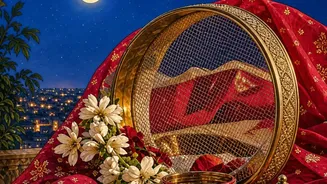
fast, but as evening fell, she grew faint with hunger and thirst. Unable to see their sister suffer, the brothers created an illusion of the moon, sometimes described as a mirror in a pipal tree or a fire behind a hill, to trick her into breaking her fast early. The moment she ate, word arrived that her husband, the king, had died. Distraught, Veeravati was met by Goddess Parvati, who explained the consequence of the broken fast. The goddess instructed her to re-observe the fast with unwavering devotion, which ultimately led to her husband's revival.
More Than a Story: The Role of a Vrat Katha
To understand the story of Veeravati, it is crucial to understand the purpose of a 'vrat katha'. A 'vrat' is a vow, often involving a fast, while a 'katha' is the story that accompanies it. These narratives are not intended to be literal, historical accounts. Instead, they serve as moral and educational anchors, illustrating the virtues associated with the fast, such as devotion, faith, and perseverance. The katha gives emotional and spiritual weight to the ritual, helping the devotee focus their mind and heart on the purpose of their observance. Stories like Veeravati's provide psychological solace and a sense of purpose, connecting the individual's act of fasting to a timeless, divine narrative.
Searching for Historical Roots
While the story of Veeravati is rich with meaning, there is no verifiable historical evidence to suggest she was a real person. Sources confirm that the tale comes from folk tradition, not from historical scriptures like the Puranas, although the 'Karaka Chaturthi' fast is mentioned in them. The origins of Karwa Chauth itself are somewhat unclear. Some historians suggest the festival began as a prayer by women for the safe return of their husbands from military campaigns. Others link it to the start of the wheat-sowing (Rabi) season, where women would pray for a good harvest. The festival was also a way for newly married women, often married young and living far from home, to build friendships and a support system with other women in their new village.
From Community Prayer to Marital Devotion
Over time, the focus of Karwa Chauth appears to have shifted from a more general prayer for community well-being or a good harvest to a specific ritual centered on the husband's longevity. Other legends, such as the story of the devoted wife Karva who confronted Yama, the god of death, to save her husband, also highlight this theme of marital fidelity and strength. The tale of Savitri and Satyavan, where a wife's devotion convinces Yama to restore her husband's life, is another cornerstone of this tradition, often associated with the festival's spirit. The Veeravati story, with its dramatic and relatable elements of love, deception, and redemption, became a powerful and popular vehicle for expressing these values.
The Power of Folklore in Modern Times
The endurance of Veeravati's legend speaks to the power of folklore. Stories do not need to be factually true to be culturally significant. The tale provides an emotional anchor for the fast, turning a day of physical hardship into a narrative of profound love and devotion. It articulates the spiritual stakes of the ritual, making the act of fasting a deeply personal and meaningful experience. In modern times, while the context of war and harvest may have faded for many, the story's core message of sacrifice and love continues to resonate, giving the ancient tradition enduring relevance in contemporary society. It is a testament to how storytelling functions as a vital component of spirituality, shaping and sustaining cultural identity across generations.